Senior Dog Peeing Indoors? Cognitive Decline May Be Behind It, Study Finds

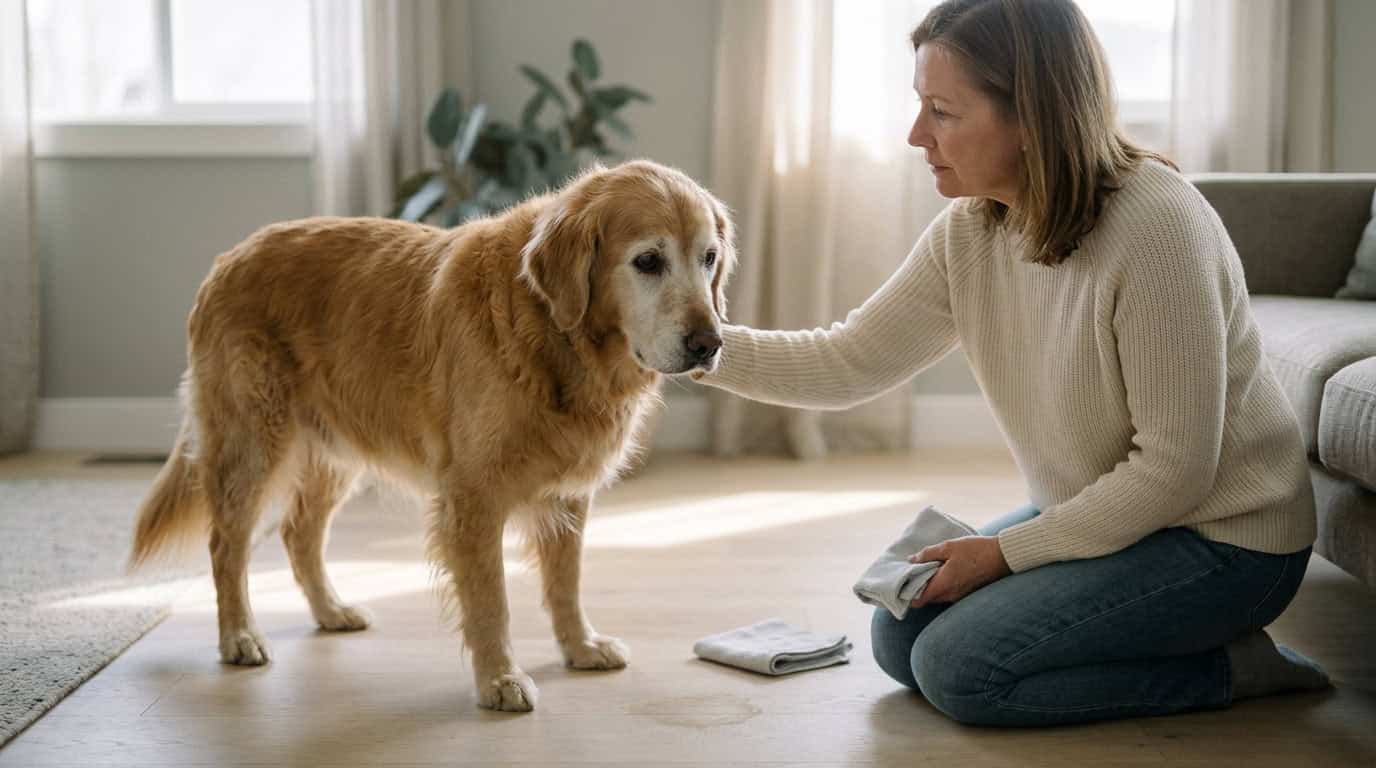
Your older dog has always been house-trained, so finding a puddle on the floor can be confusing and frustrating. Before you assume it is bad behavior, it helps to know that age-related changes in the brain are one possible cause.
Yes, cognitive decline can cause a senior dog to urinate indoors, and it is often seen alongside other changes such as confusion, disrupted sleep, and less interaction with family members. Research on canine cognitive dysfunction describes it as a disease of brain aging that affects both dogs and cats. One study found that social interactions and the sleep-wake cycle were among the most affected areas in elderly dogs.
Not every accident points to dementia, though. Medical problems such as urinary tract infections, kidney disease, and arthritis can also lead to indoor urination. Signs of medical conditions have been studied in relation to cognitive decline in senior dogs. This article explains what to watch for, when to call your veterinarian, and how you can help your dog stay comfortable.
When Dementia Undoes Your Dog’s House Training
Canine cognitive dysfunction (CCD) is a brain aging condition that can erase learned habits, including where and when your dog goes to the bathroom. Research links it to loss of house training, but accidents also have other medical causes you need to rule out.
Why Your Senior Dog Forgets Where to Go
As the aging brain loses efficiency, your dog may forget what house training taught them. A dog that signaled at the door for years may now stand in the middle of a room and urinate without any warning.
Studies describe loss of house training as one of the most impaired areas in senior dogs with CCD. Researchers found it among the most common changes, along with shifts in social interaction.
Several things can happen at once:
- Your dog forgets that outdoors is the right place to go.
- Your dog loses track of the signal for needing to go out, such as waiting at the door.
- Your dog becomes confused or disoriented and cannot find the door.
- Your dog’s sleep and wake cycle shifts, leading to nighttime accidents.
Accidents in these cases are not defiance. Your dog is not acting out of spite, and scolding can add anxiety without fixing the problem.
What the Research Can and Can’t Tell You
Research on senior dogs shows that cognitive decline is common and often goes unnoticed. One review reports that 73% of senior dogs assessed had at least one sign of CCD, and house training changes were among the most frequent signs.
This supports the idea that indoor accidents can point to cognitive decline. However, a link between two things does not prove one causes the other.
Keep these limits in mind:
- Many conditions cause accidents. Urinary tract infections, kidney disease, diabetes, arthritis, and weak bladder control can all lead to indoor urination.
- A symptom is not a diagnosis. Only a veterinarian can confirm CCD, usually after ruling out other causes.
- Study groups vary. Results from one group of dogs may not match your dog’s situation.
Your veterinarian may run blood work, a urine test, and a physical exam before considering CCD. Treating a hidden medical problem can sometimes stop the accidents.
Other Signs to Watch For
If CCD is the cause, house training loss rarely appears alone. Veterinary guidance on senior pet behavior notes that anxiety, irritability, and changes in sleep often show up alongside it.
Veterinarians often use the acronym DISHA to group these signs:
| Sign | What You May Notice |
|---|---|
| Disorientation | Getting stuck in corners or staring at walls |
| Interaction changes | Less interest in greeting you or playing |
| Sleep-wake changes | Restlessness or pacing at night, more daytime sleep |
| House-training loss | Accidents inside, often without warning |
| Activity changes | Aimless wandering or reduced activity |
Note when accidents happen, how often, and what else has changed. A short written log gives your veterinarian useful detail. A recent clinical review of senior dog care may also help you discuss screening options with your vet.
What Your Vet Can Do and How You Can Help
A vet visit can tell you whether indoor accidents come from a bladder problem, a joint problem, or changes in your dog’s brain. Simple changes at home, such as more frequent trips outside and better lighting, can reduce accidents while you work with your vet on a plan.
First, Your Vet Will Rule Out Other Causes
Cognitive decline is a diagnosis your vet reaches after other causes are ruled out. Research on older dogs notes that conditions that increase urine output or frequency can also lead to house soiling.
Expect your vet to do a physical exam and ask when the accidents happen. Common tests include:
- Urinalysis and urine culture to check for infection, crystals, or dilute urine
- Blood work to look for kidney disease, diabetes, or thyroid and adrenal problems
- Orthopedic and neurologic exams to check for arthritis or nerve problems that make it hard to get up or squat
Bring notes. Write down how often your dog drinks, how often accidents happen, and whether your dog seems aware of them. A short phone video of your dog standing up or walking can also help.
If these tests are normal, your vet may use a cognitive screening questionnaire to look for signs of canine cognitive dysfunction.
When to Call Your Vet Right Away
Some changes should not wait for a routine visit. Call your vet soon if you see any of the following:
- Straining to urinate, or passing only small drops
- Blood in the urine
- A sudden jump in water intake or urine volume
- Vomiting, loss of appetite, or unusual tiredness along with accidents
- Dribbling urine while your dog sleeps or rests
- Pain, yelping, or refusing to move
Go to an emergency clinic right away if your dog cannot pass urine at all. A blocked urinary tract is a medical emergency.
Slower changes matter too. One study found that only 7% of owners mentioned geriatric behavior changes to their veterinarian without being asked. Do not wait for a vet to ask. Report night waking, pacing, staring at walls, getting stuck in corners, and forgetting familiar people or routines.
How to Adjust Your Routine and What to Ask Your Vet
Start with the routine. Take your dog out first thing in the morning, after meals, after naps, and right before bed. Many senior dogs do better with outings every 3 to 4 hours during the day.
Stay outside until your dog goes, then give praise or a treat right away. Do not punish accidents. Your dog may not understand why you are upset.
Other helpful steps include:
- Use night lights near doors and along the path to the yard
- Add rugs or runners on slick floors
- Keep a consistent daily schedule for feeding and walks
- Clean accidents with an enzymatic cleaner to remove odor
- Offer puzzle toys and short training sessions
A consistent routine and mental enrichment may help maintain or slow the loss of thinking skills.
Ask your vet about treatment options. These may include a prescription diet with added antioxidants, a neuroprotective nutraceutical, or a medication for cognitive dysfunction, anxiety, or sleep problems. Your vet can tell you which choices fit your dog’s health and other medications.