Your yelling physically destabilizes your dog, measured in millimeters

Your voice can shake your dog’s balance. Research on posture shows that loud, harsh sounds cause the body to sway and shift position, and this reaction has been measured in millimeters.
When a sound carries negative emotion, like a scream or a car alarm, the body responds by losing steadiness.
Yelling at your dog can trigger a similar physical response, causing small but measurable shifts in balance and posture. Your dog’s body reacts to sudden, loud noise the same way a human body does.
This means your tone of voice does more than send a message. It creates a physical reaction inside your dog.
Understanding this can change how you approach training and correction. Instead of relying on volume, you can look at calmer methods that avoid startling your dog’s nervous system.
How Loud Vocal Stress Affects Canine Balance and Movement
When you raise your voice at your dog, the effects go beyond emotion. Your dog’s body reacts physically, and researchers can now measure these reactions down to the millimeter.
Your Dog’s Body Reacts Before You Finish Shouting
When you shout, your dog’s body reacts almost instantly. Muscles tense, weight shifts, and your dog’s stance becomes less steady for a brief period.
This reaction is tied to the startle response, a built-in survival mechanism that prepares animals to react to sudden threats.
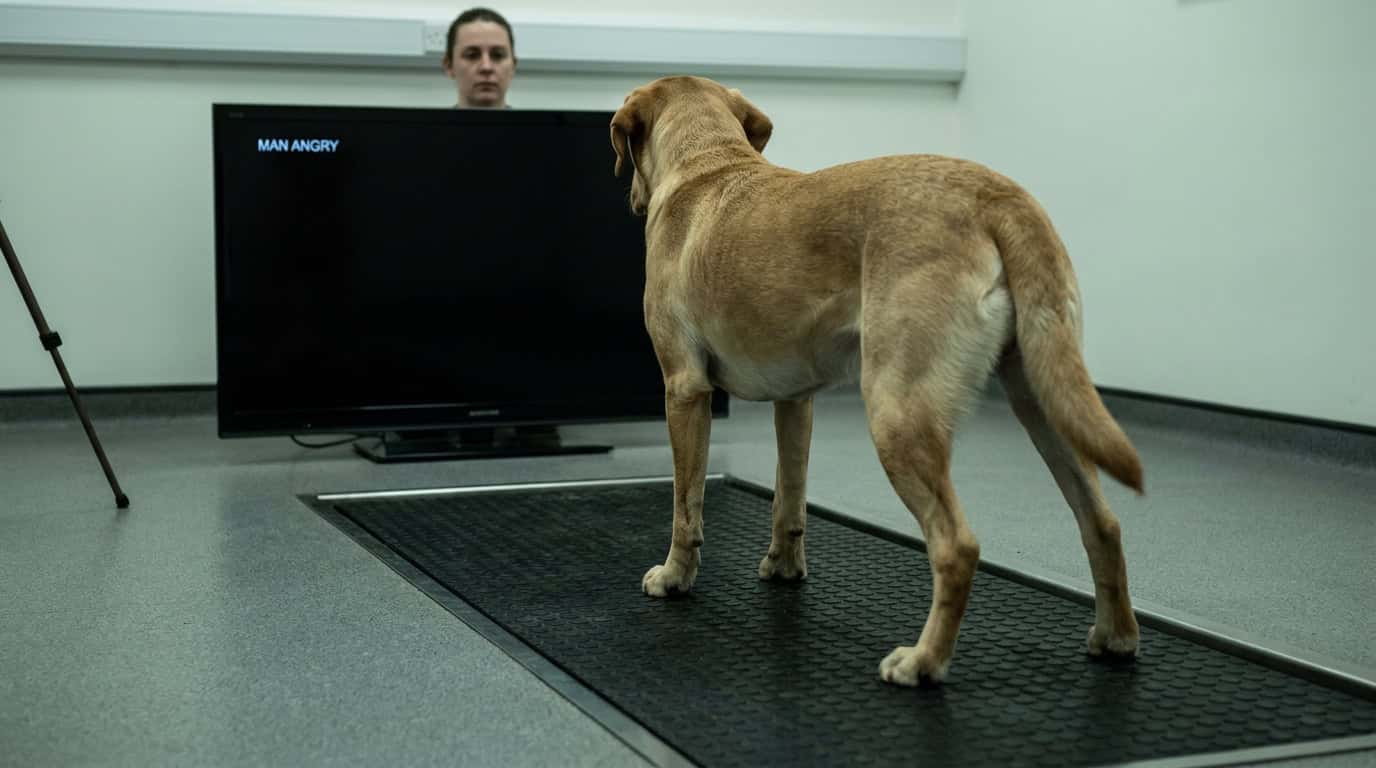
Research shows that emotional tone in your voice can change how your dog balances. One study found that angry voice recordings affected postural stability in dogs more than calm or happy tones.
Dogs in that study showed a larger support surface area on a pressure plate when exposed to angry voices, which points to reduced stability.
Not every dog reacts the same way. Some dogs show clear signs of instability, while others show little to no change.
What Millimeter-Scale Measurements Can and Cannot Show
Millimeter-level data can show small shifts in how your dog stands or moves. Tools like pressure plates track things such as:
- Mediolateral displacement (side-to-side movement)
- Craniocaudal displacement (front-to-back movement)
- Average speed of body sway
- Support surface area
These numbers can reveal that your dog’s balance changed after hearing a loud or angry voice. However, they cannot tell you why the change happened or how your dog feels emotionally.
The exploratory biomechanical analysis also found that reactions varied widely between dogs. Some showed increased instability, while others showed almost no change at all.
This means millimeter measurements are useful for spotting physical patterns, but they cannot replace direct observation of your dog’s behavior and stress signals.
Reducing Vocal Stress in Daily Dog Handling
Small changes in how you speak to your dog during everyday tasks can lower stress and improve cooperation. Watching for warning signs and switching to calmer cues will help you handle routine situations without triggering a fear response.
Watch for These Signs of Fear or Disorientation
Your dog cannot tell you when loud commands feel overwhelming. Instead, the body shows it.
Watch for these signals during handling or training:
- Lowered head or tucked tail
- Flattened ears against the skull
- Lip licking or excessive yawning
- Freezing in place or stiff posture
- Trying to back away or hide
These reactions often show up right after a loud or sharp tone. Cows show a similar aversion to shouting and rough handling, and taming or gentle training methods can reduce these fear responses over time, according to research on animal handling and restraint.
If you notice these signs, stop and lower your volume. Repeated exposure to yelling can make your dog more reactive to normal sounds and handling over time.
Using Calm Cues and Safer Training Alternatives
Replace loud commands with short, steady words spoken at a normal volume. Dogs respond well to consistent tone and clear body language, not volume.
Try these alternatives during daily handling:
| Instead of | Try This |
|---|---|
| Shouting „No!“ | A firm, low „Ah-ah“ |
| Yelling a name repeatedly | Saying the name once, calmly |
| Raising your voice when frustrated | Pausing and resetting your tone |
Hand signals paired with quiet verbal cues can reinforce commands without added stress. Consistency matters here. Mixed signals or unpredictable reactions can make it harder for your dog to feel secure during training.
Keep sessions short and reward calm behavior right away. This approach builds trust and reduces the physical stress response tied to loud vocal handling.