
Why Are Dogs Called K9?


You have likely seen police cars marked “K9” or heard someone call a working dog a K9. The term sounds official, and it clearly means something more than just “dog.” So why do people use it?
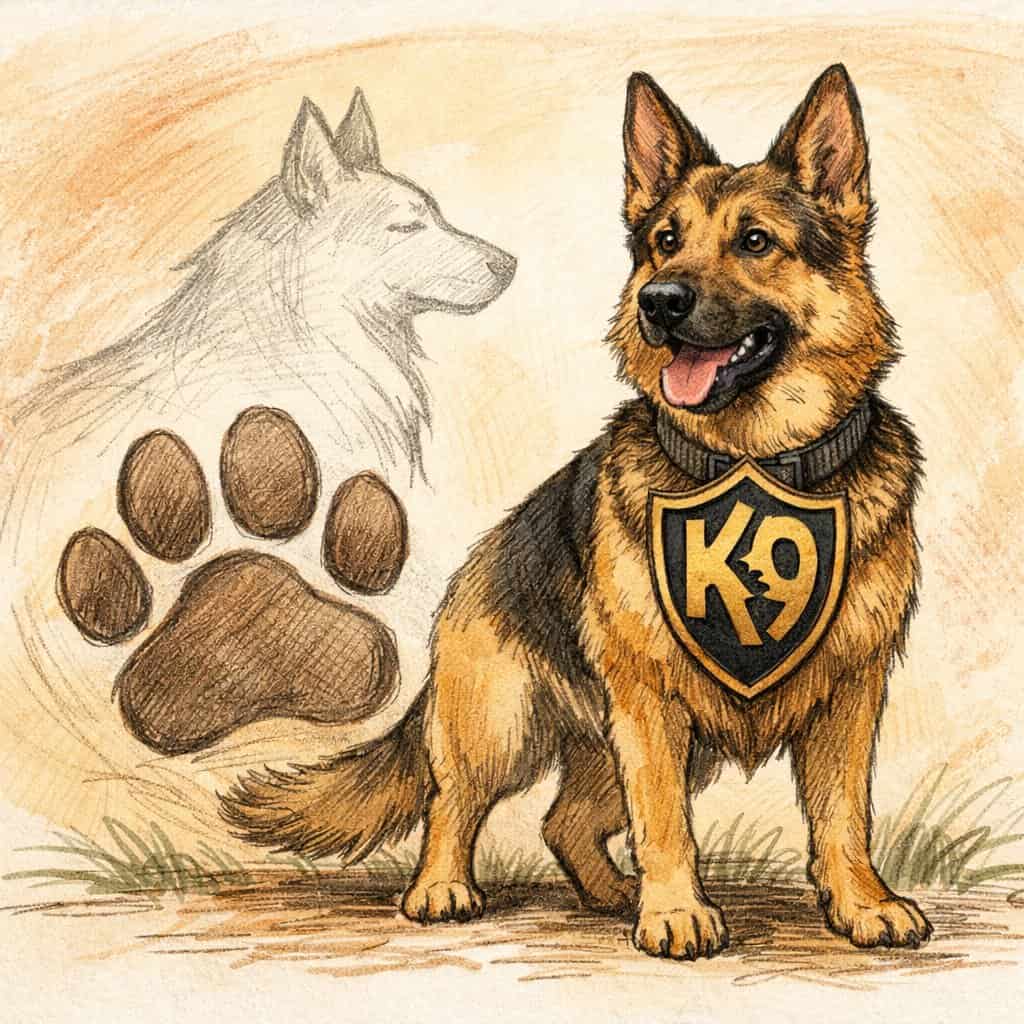
Dogs are called K9 because the term sounds like “canine,” the word that refers to the dog family. The letter “K” and the number “9” create a short, easy way to say and write the word “canine.”
As you explore this topic, you will see how the name started and why law enforcement and the military use it so often today. You will also learn how K9 became a common term in everyday life, not just on police badges and patrol cars.
The Origin and Meaning of K9
The term K9 comes from a simple wordplay on “canine.” You see it most often in police and military work, but it applies to dogs in general.
Etymology of K9
The word K9 is a phonetic spelling of canine. When you say the letter “K” and the number “9” out loud, you hear “kay-nine,” which sounds like “canine.”
The word canine comes from the Latin word canis, which means “dog.” Scientists use Canidae as the name for the dog family. This group includes domestic dogs, wolves, foxes, and coyotes.
You may also see people claim that the “9” stands for something else. In simple terms, it does not. The number 9 only helps copy the sound in a short and clear way.
This kind of wordplay is called a homophone. It makes the term easy to remember and quick to write.
Historical Context of K9 Usage
You often see K9 used in police and military settings. Law enforcement agencies began using the term to label their dog units as “K9 Units.”
Police started formal dog programs in the early 1900s, especially in Europe. The use of trained dogs later spread to the United States. As these programs grew, departments needed a short and clear label for trained dogs.
“K9” worked well because it was brief and easy to place on badges, patrol cars, and reports. Today, you will see signs like “K9 Unit” on police vehicles.
These dogs handle specific tasks, such as:
- Tracking suspects
- Detecting drugs or explosives
- Searching for missing people
- Providing protection
The term became common because it was simple and practical.
Difference Between K9 and Canine
You might wonder if K9 and canine mean the same thing. They are related, but you use them in different ways.
Canine is a formal word. It can describe anything related to dogs. For example, you might hear about “canine health” or “canine teeth.”
K9, on the other hand, usually refers to trained working dogs. Most people use it in law enforcement or military settings.
Here is a quick comparison:
| Term | Meaning | Common Use |
|---|---|---|
| Canine | Any member of the dog family | Science, veterinary care |
| K9 | A trained working dog | Police, military units |
When you hear “K9 officer,” it means a police dog and its human handler working as a team.
K9 in Modern Society
You see the term K9 most often in police work and in popular media. Today, it stands for trained working dogs that serve in public safety and appear in movies, TV, and news stories.
K9 Units in Law Enforcement
When you hear about a K9 unit, it usually means a trained police dog and its handler. These dogs work in law enforcement agencies across the United States and many other countries.
Police departments train K9s to handle specific tasks, such as:
- Tracking missing people
- Finding illegal drugs
- Detecting explosives
- Searching buildings
- Apprehending suspects
Most K9s are breeds like German Shepherds, Belgian Malinois, and Labrador Retrievers. Trainers choose them for their strength, focus, and strong sense of smell.
A K9 officer and the dog train together for months. They build trust and learn to respond to clear commands. You will often see “K9 Unit” printed on police vehicles, uniforms, and badges. The label quickly tells you that a trained working dog is part of the team.
K9 teams also work at airports, borders, schools, and large public events. Their role focuses on safety and detection, not just patrol work.
Popularization in Media and Culture
You also see the term K9 in movies, television shows, and news reports. Police dramas often feature a loyal K9 partner who helps solve crimes.
These shows helped make the term common in everyday speech. Even people who do not work in law enforcement understand that “K9” means a trained service dog.
The word appears in:
- TV series about police work
- Family films about working dogs
- News stories about search-and-rescue missions
Media often shows K9s as brave and disciplined. While real-life work is less dramatic, these portrayals helped fix the term “K9” in public memory.
Today, when you hear “K9,” you likely picture a uniformed officer and a focused working dog ready to perform a clear task.