8 Signs Your Dog May Be Developing Dementia

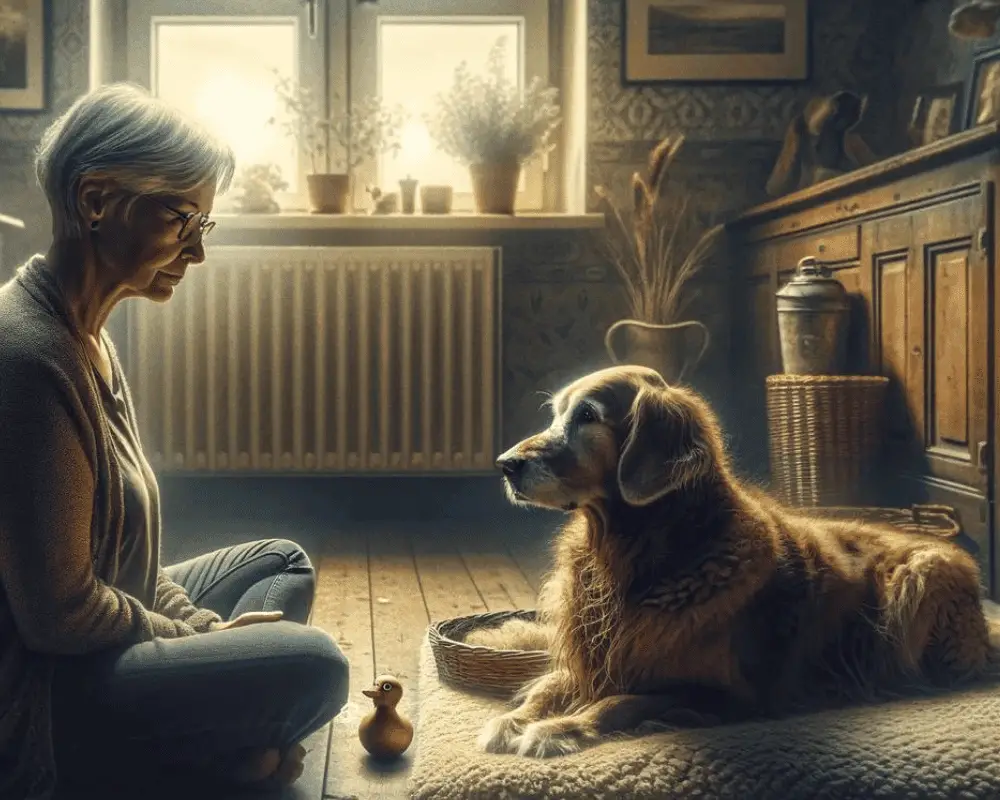
As we get older, a lot of things change. Our backs aren’t as cooperative as they used to be and we’re out of breath after just a few stairs. Your dog is no different.
There is, however, a difference between normal signs of aging and signs of dementia. This condition, which in dogs is actually called canine cognitive dysfunction syndrome , is easier to treat the earlier you catch it.
Below you can learn about 8 typical signs that your dog may be developing dementia.
🔍 #1: Generally atypical behavior
A rather nonspecific sign is that your dog starts showing behaviors that are unusual for him. When dementia begins, a dog’s personality often changes a little. As a result, he may suddenly reject things he used to enjoy.
Refusing to leave the house when he otherwise loves going for walks can also point to early dementia. Some dogs also seem to stop caring about puddles or trash on the path.
Especially if your four-legged friend used to be very particular about not getting his paws wet or dirty, this behavior should make you take notice.
But don’t read too much into this one sign. As mentioned, it is a nonspecific symptom that can have many causes. Your dog’s needs change with age even without dementia. Stepping in puddles can also point to declining eyesight.
Keep a close eye on your dog and have your vet check him if needed. If more of the signs listed here appear, the picture becomes clearer.
🔍 #2: Changed sleep rhythm
A classic sign of early dementia is nighttime restlessness. Your dog’s internal clock is affected by the condition. At some point, he has trouble telling day from night.
He is then simply not tired at night and instead paces around restlessly.
If you notice this in your dog, you can help him. Set routines during the day and in the evening to guide him. He can use them as a reference and always know what time of day it is.
You can also read about this on the site of Neurologists and Psychiatrists Online. The page discusses dementia in people, but many tips can be applied to dogs.
For these routines to work, the day needs to be clearly different from the night. Make sure it is bright enough during the day and that your dog has plenty of activities. Of course these should be adapted to his age. That way he will be tired in the evening.
Especially in the afternoon, try to prevent him from sleeping too much. Senior dogs need a lot of sleep, but deep, restorative sleep should still happen at night.
🔍 #3: Disorientation
Disorientation and confusion are often among the first signs of dementia that dog owners notice. The dog paces restlessly around the house as if he were looking for something. He seems to have no goal. Suddenly he turns around or just stops as if he had forgotten what he was about to do.
It is also typical for a dog with dementia to stare at familiar objects and almost fixate on them. It looks as if he had never seen the object before and needs to examine it closely.
It is also possible that your dog is afraid of it or repeatedly startles at certain pieces of furniture.
If he paces around or fixates on something, he often does not stop on his own. He would walk up and down the hallway for hours or stare at that one armchair. To snap out of it, these pups need help.
Talk to your dog and redirect his attention to something else.
For disorientation, it helps your dog to have a smaller area to move around in. Dogs with dementia sometimes lose their sense of orientation so much that they can no longer find their own water bowl.
So place it where your dog will pass by more often. Ideally, set out several, including one right by his bed.
🔍 #4: House soiling
Dogs usually learn right at the start where they are allowed to relieve themselves. Most pick up quickly that pee breaks happen outside. It works just fine for the next ten years.
When a dog develops dementia, house soiling can return. It is important to distinguish between incontinence and house soiling. With dementia, your dog can hold his urine yet still goes in the house. He is having accidents, not incontinent. There are several reasons for this.
First, progressing dementia impairs how the brain processes signals. The bladder sends “I need to be emptied” to the brain. That information no longer arrives properly. A healthy dog would now make himself known, bark, scratch at the door, or whine.
A dog with dementia does not realize he needs to pee. At some point his bladder cannot hold it anymore and he goes in the house.
Second, house soiling is related to disorientation. Your dog may no longer know where he is. He thinks he is outside and matter-of-factly does his business. This happens especially in unfamiliar places or those with many and large houseplants.
Help your dog in that case by taking him outside very often. This gives him frequent chances to relieve himself. Do not be angry if he has an accident. Your dog is not trying to annoy you.
🔍 #5: Changed social behavior
A dreaded sign of dementia is that your dog no longer recognizes you. Fortunately, this usually happens only when dementia is already advanced. If your four-legged friend suddenly does not know who you are, it is a very clear sign that he has dementia.
He may also fail to recognize other social contacts. He will respond to their attempts to interact differently than he normally does.
With you, your dog might refuse petting, growl, or bark at you because he mistakes you for an intruder. The enthusiastic greetings after a long workday may also be missing.
He will also be reserved to dismissive toward dogs he actually knows.
If this happens with your dog, do not just accept it. Social contact is extremely important with dementia. This is also shown by this research report by Nadja Ziegert, Sabrina D. Ross, and Francisca S. Rodriguez.
The study looked at people, but it is reasonable to assume that social contact also benefits dogs with dementia.
Your dog still needs social interaction. Just make sure he is not overwhelmed. Often an attempt at contact will work a little later or on another day, even if it failed today.
🔍 #6: Increased barking
All dogs bark from time to time. Some are naturally more vocal, others are quieter. If your dog’s barking changes, it could be related to dementia.
Nighttime barking that seems to have no reason to us is a particular hint. It ties in with nighttime restlessness. Your dog creeps through the dark home and may not even know why he is doing it. He is overwhelmed by the situation and scared.
Barking seems appropriate to him. With luck it alerts you, while also scaring off dangers and his fear.
Do not scold your dog if he suddenly starts barking at night. You may not see a reason, but your dog was simply scared. You cannot punish him for that.
Instead, help him cope. Let him sleep near you, put up night lights, or prevent him from wandering too far from his bed. For safety, take him outside once as well. Maybe your four-legged friend just needs to go and was trying to tell you by barking.
🔍 #7: Changed eating habits
Many dogs eat less as they age. Their metabolism slows down, they lose muscle mass, and they move less. Accordingly, they need far less energy. No wonder there is food left in the bowl.
Dogs with dementia may refuse their food entirely. It can also happen that after the first serving the dog asks for seconds. That is much less common, though.
The reason for this behavior is often forgetfulness. Your dog has either forgotten that he already ate or he believes it is already dinnertime.
If the bowl stays full, there is another explanation: dementia comes with several negative feelings that raise stress levels.
Stress hormones can trigger ravenous appetite. But tension can also make it impossible to get a bite down. Maybe you know it from yourself: on particularly stressful days, eating is the last thing on your mind. There is so much to do that you never find a moment to sit and eat in peace.
Your dog with dementia feels something similar. In that case, offer several small portions throughout the day. Vary what is in his bowl, warm it up, or give him something special. Senior dogs should not go more than 48 hours without food. If he keeps refusing his meals, it is best to see your veterinarian.
🔍 #8: Forgetfulness
What we often mistake for stubborn old age is actually a sign of dementia: we give a cue and the dog just stands there looking at us. His look is not even defiant. We tend to project that because we are convinced he understood us perfectly.
But he did not. On the one hand, many senior dogs have age-related hearing loss. On the other, dementia keeps him from matching familiar cues to actions. Even if he hears your “sit,” he no longer knows what you mean.
Your dog is not trying to annoy you. He is probably frantically searching his brain for the right response. If he cannot find it, that is frustrating for him too.
If your dog has progressed a few stages further, he may no longer properly associate his own name. He hears it but no longer knows that it refers to him.
At this stage you can almost see his mind working. He knows perfectly well that the words have meaning for him, but he cannot piece them together anymore.
To slow down this forgetfulness, you need to help him with brain games. Shell games, where you simply place an upturned plastic cup over a crumb of kibble, are great for this. If your dog already knows these games, you can increase the difficulty. Set out several cups or get dedicated puzzle toys for dogs.
Conclusion
There are many early signs of dementia in dogs. What does not exist is a definitive test. Your vet will also make the diagnosis based on your observations and their own.
That is why it is all the more important that you know which signs could indicate early dementia.
Do not despair over the diagnosis. There are medications that can slow the progression of the disease. With my tips you can counteract it as well. Stay calm and accept this challenge as part of the journey you and your dog are on together.