Is Your Senior Dog Losing Teeth? Causes & Tips [Expert Advice]

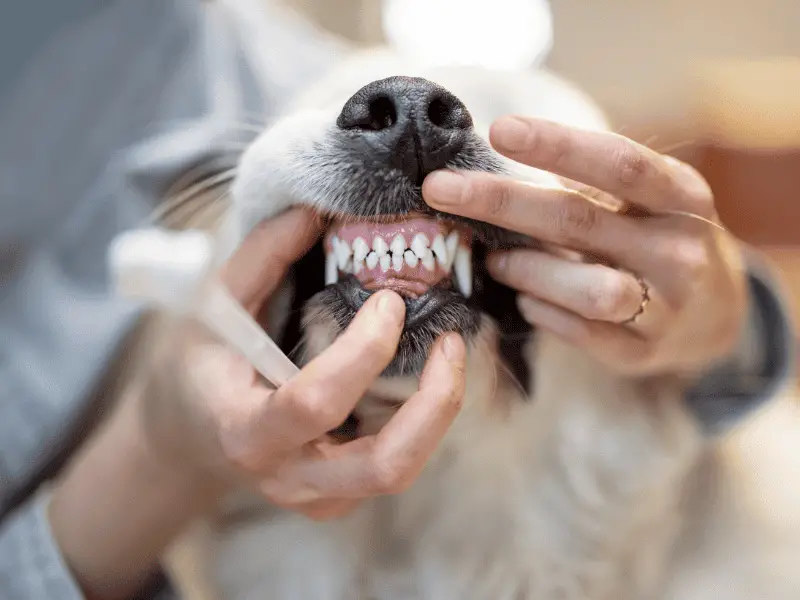
Have you brushed any teeth today? Your dog’s, I mean. If you answered no, you are in the majority of dog owners. Only a few dog owners really pay attention to their dog’s dental hygiene.
So it does not strike us as odd when a dog loses teeth with age. That must be normal, since it happens to people too.
Whether it is truly a normal sign of aging or whether there are more serious causes behind it, I will tell you today.
My older dog is losing teeth: in a nutshell
Tooth loss is not a normal sign of aging in dogs. It develops with diseases of the periodontium and can have serious health consequences for your dog.
You can recognize impending tooth loss by bleeding gums, loose teeth, and refusal to eat. You should always have gaps checked by your veterinarian. Regular toothbrushing keeps your dog’s teeth healthy.
How important is dental hygiene for dogs?
I hardly know any dog owner who pays special attention to their dog’s teeth. We brush our own teeth twice a day, but we do not care for our dogs‘ teeth.
Yet dental hygiene is very important for dogs too.
Just like people, they can get gum inflammation or abscesses in the mouth, which can ultimately lead to tooth loss.
There are implants for dogs, but for them, teeth are a bit of a luxury item. That means treatment is very expensive. Even if you have insurance for your dog, it is quite possible that dental treatments will not be covered.
That is why you should prevent dental problems by caring for your dog’s teeth.
Why do small dogs often have worse teeth?
The smaller the dog, the more likely he is to suffer from dental disease. It is not just your impression, it is really true. There are several reasons for this.
When smaller breeds were developed, the teeth did not shrink at the same pace as the rest of their bodies. That means the teeth of Yorkies, Chihuahuas, and the like are actually too big for their jaws.
It gets especially bad if the dog is also short-nosed. Then his teeth have even less room. As a result, they shift against each other.
The spaces between the teeth are barely there. Food particles get stuck there particularly easily. Small dogs also tend to breathe through the mouth rather than the nose. Because dogs have mineral-rich saliva, tartar forms more quickly, as you can read in an article by Martin Florian Buck.
You might also be interested in: Can a dog manage without teeth? Tips and explanation
Why your dog loses teeth as he gets older
Many people lose teeth as they get older. We consider that normal, but it actually is not. Our teeth should last a lifetime. After all, we still have to be able to chew at 80 years old.
We often turn to implants, but what we really should do is address the cause of tooth loss. For both people and dogs, that cause is mostly a lack of dental hygiene.
Overall, the following causes are possible:
- Periodontitis and, as a consequence, tartar
- Alzheimer’s
- Tooth damage
- Calcium deficiency
🔍 Cause #1: Periodontitis
Parodontose and periodontitis describe the same disease. The term parodontosis is outdated and is therefore used less and less.
Periodontitis is inflammation in the periodontium. The inflammation attacks the gums, among other things, so the gums recede. You can recognize this by your dog’s teeth looking unusually long and a bit of the root being visible.
Periodontitis goes hand in hand with plaque, where pathogens can multiply freely. If your dog suffers from it, you will notice
- bad breath,
- dark deposits,
- loose teeth,
- reddened gums,
- frequent bleeding gums, and
- refusal to eat
in your dog.
🔍 Cause #2: Tartar
Tartar and periodontitis go hand in hand. Tartar is hardened plaque. It forms when your dog’s teeth have been left dirty for a longer period.
You can recognize tartar by thick deposits on your dog’s teeth. The back teeth are often more affected than the incisors. You will also see the same symptoms as with periodontitis.
Learn more about tartar in this video.
🔍 Cause #3: Alzheimer’s
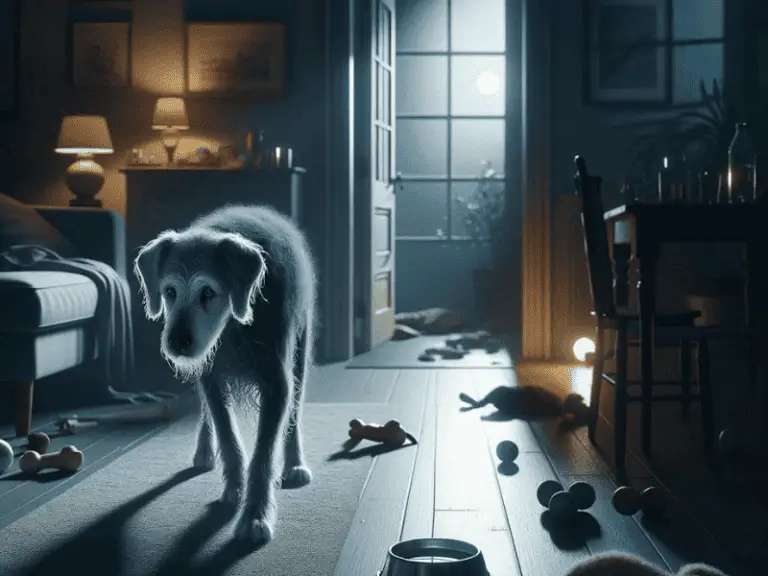
Unfortunately, Alzheimer’s is seen in dogs too, just like in people. The disease primarily affects seniors, but it can also appear in younger animals. It first shows up as confusion, atypical behavior, and forgetting commands.
As it progresses, your dog may eventually not find his food bowl anymore. Alzheimer’s and dental problems seem to be more closely linked, at least in people, than previously thought. Until a few years ago, we assumed the dental problems were due to patients neglecting oral hygiene.
Dentist Angela R. Kamer and other researchers suspect it may actually be the other way around. Periodontitis first leads to inflammation in the brain, which then triggers dementia. Further studies need to show exactly how the two diseases are connected.
🔍 Cause #4: Tooth damage
Dogs love to chew on all sorts of things. Sometimes, unfortunately, they do not limit themselves to chew treats and other safe items. Some dogs do not even stop at stones.
Chewing on objects that are far too hard can damage the teeth. Chipped corners or cracked and split teeth give pathogens a pathway into the tooth. There they gradually destroy it. In the end the tooth simply falls out.
You can recognize tooth damage by
- visible fracture lines or chipped edges on the teeth
- dark discolorations on the teeth,
- refusal to eat,
- signs of pain while chewing, and
- general susceptibility to infections.
🔍 Cause #5: Calcium deficiency
Calcium is an essential mineral for your dog. It plays a key role in bone metabolism. Your dog needs about 50 mg per kilogram of body weight daily.
If he gets too little over a longer period, a deficiency will develop. You can recognize it by
- muscle cramps,
- confusion,
- reluctance to move,
- stiff limbs, and
- forgetfulness.
Additionally, your dog’s bones suffer. With a severe deficiency, your dog could develop osteoporosis. The jaw bones are affected too. As a result they can no longer hold the teeth properly. Tooth loss becomes more likely.
Keine Produkte gefunden.
Why you should go to the veterinarian
A gap is not a big problem, right? Your dog still has enough chompers to chew his food. Or does he?
No, unfortunately that is not the case. Every tooth your dog loses is a reason to see the veterinarian. First, a wound forms in your dog’s mouth. Your vet needs to check whether there are root remnants or any inflammation.
Then it is crucial to treat the cause of the tooth loss. Heavy tartar and inflammation in the mouth can even threaten your dog’s life.
What your veterinarian will do when your older dog is losing teeth
First, he will treat the gap. Your dog will probably receive an antibiotic to prevent infection right away.
Then your veterinarian will check his entire mouth for inflammation and tartar. If he finds anything, your dog may need additional medication. Tartar is removed with ultrasound under anesthesia.
Also read >> Is tartar removal in dogs possible without anesthesia?
This is important because only in this way does the especially harmful tartar that lies under the gums disappear. If your dog is already very old, you will decide together whether you want to accept the anesthesia risk.
In some cases, it can make sense to address several of your dog’s issues in one go. That does extend the anesthesia a bit, but it keeps it to one procedure. If your veterinarian detects early dementia, he will recommend exercises that train your dog’s brain.
Some veterinarians prescribe supplements, even though their effectiveness is barely researched. They do not harm your dog, at least.
If there is a calcium deficiency, check whether your dog’s food contains enough of the mineral. Replenish his stores with calcium tablets or other forms of supplements.
Preventing tooth loss in dogs: 3 tips
The best thing, of course, is if tooth loss does not happen in the first place. With these tips you increase the chances that your dog’s teeth will stay healthy into old age.
💡 Tip #1: Dental hygiene from day one
Get your dog used to a toothbrush when he is still a puppy. Please do not use human toothpaste, but choose one made specifically for dogs.
Gently brush the grime off his teeth and reward him afterwards. It can take a while until your dog accepts the toothbrush. Do not overwhelm him, give him the time he needs.
💡 Tip #2: Regular checkups
To notice dental problems as early as possible, you should check his teeth regularly. Look into your dog’s mouth. Watch for chipped edges, dark discolorations, and plaque.
Think about your own safety too. If your dog does not allow this, do not force him. With a lot of patience and training you can gradually work your way toward doing these checks.
💡 Tip #3: Prevent nutrient deficiencies
From the start, make sure your dog’s food contains all the necessary nutrients. It may be wise to check important nutrients in the blood. Upcoming bloodwork is a good opportunity for that anyway.
There is usually enough left over for follow-up tests, so you can also request individual values. It does cost money, but then you will know whether his food really provides everything he needs.
Older dog is losing teeth: the bottom line
Oral hygiene is neglected by most dog owners. Especially in old age, that is more likely to cause problems that end in tooth loss.
Do not ignore warning signs like bleeding gums, loose teeth, and refusal to eat. Untreated inflammation can make your dog seriously ill.
Ideally, it is not that far yet and you can get your puppy used to toothbrushing. It does not have to be every day, but cleaning his teeth twice a week would really help.
If your dog absolutely will not allow it, have his teeth checked regularly by your veterinarian. As long as his overall condition allows anesthesia, you should have tartar removed.
Frequently asked questions
Can dogs lose teeth as they get older?
Older dogs are more likely to suffer from diseases of the periodontium, so they are also more likely to lose teeth. However, it is not a normal sign of aging.
Can loose teeth in dogs become firm again?
Once a tooth has loosened, it will most likely not become firm again. Loose teeth are therefore removed by the veterinarian in most cases.
What should I do if my dog has lost a tooth?
If you notice a gap in your dog’s teeth, you should take him to the veterinarian. Root remnants are hard for you to recognize, but they could cause serious problems for your dog.