Do Dogs Know When They Are Dying?


At some point, the time to say goodbye comes. You do not want to deal with this topic, but it is good if you know what is coming. We often attribute extraordinary intuition to animals. We believe that our dogs know when their time is coming.
But can that even be true? And what does that mean for you as an owner? What does the dying process look like?
I answer these and other questions for you in this article.
Does a dog sense when he is going to die? In a nutshell!
Dogs can smell subtle chemical changes in the body, which is why they may also be able to perceive when someone, or they themselves, are dying.
Most four-legged friends initially refuse their food and withdraw. This behavior is a holdover from the wolf.
During the final phase of dying, a dog has convulsions but no longer feels pain.
The fine intuition of our four-legged friends: why they may sense when they are going to die
We can only speculate whether a dog understands what death means. After all, unfortunately no one has yet found a way to talk with their dog.
Sure, our four-legged friends understand commands. But having a discussion about death is a whole lot harder.
What we do know is that dogs are able to detect tiny chemical changes in the body. They sniff out cancer (English source), low blood sugar in people with diabetes (English source), and can detect an oncoming epileptic seizure (English source).
These things have to do, among other factors, with changes in our blood. Dogs detect those changes. So it is quite conceivable that a dog also notices them in himself or in others that point toward death.
Most dogs react to a deceased companion quite pragmatically, even if he was a good buddy. They sniff him and then quickly lose interest.
Yes, it probably still smells like their buddy, but he does not seem to be there, they might think. Whether they truly understand in that moment that this other dog is gone is questionable.
4 typical behaviors of a dying dog
Dying itself is divided into three phases, more on that later. Your dog can show typical signs that his life is coming to an end even before the first phase.
Some of the behaviors described in the following subpoints occur during the dying phases. Others your dog may show earlier.
1) Refusing food and water
Many dogs repeatedly show through refusing food that they are not feeling well. If they have stomach pain, the bowl sometimes stays full for several days.
However, during that time the four-legged friends usually still drink a bit. If your dog senses that his end is near, he will not touch his water either.
We do not know exactly why that is. It may be that the dog no longer wants to take in the energy the food would provide.
After all, he would not use it anymore anyway. In addition, the internal organs slowly shut down during the dying process. Your dog may sense that he would not be able to digest his food anymore.
If your dog refuses food and water and will not even take beloved treats, that could be the first sign. Still, I would advise you to go to the vet at this point.
As I said, many dogs do not eat for a few days when they are sick. So it may also be that your senior is just fighting off an infection. Have that checked in any case.
2) Fatigue and reluctance to move
Dying is not an easy process. The body gradually shuts down its functions. That is not only exhausting but often also associated with pain.
Many dogs do not show the pain, they endure it silently. We dog owners do not even notice that our four-legged friend is suffering.
When a dog’s time is nearing, he will barely move. You will not be able to motivate him even for walks.
That does not mean that every old dog who sleeps a lot and moves little is dying. But if he hardly gets up anymore and also loses control of his bladder, that can be a sign.
3) Distance
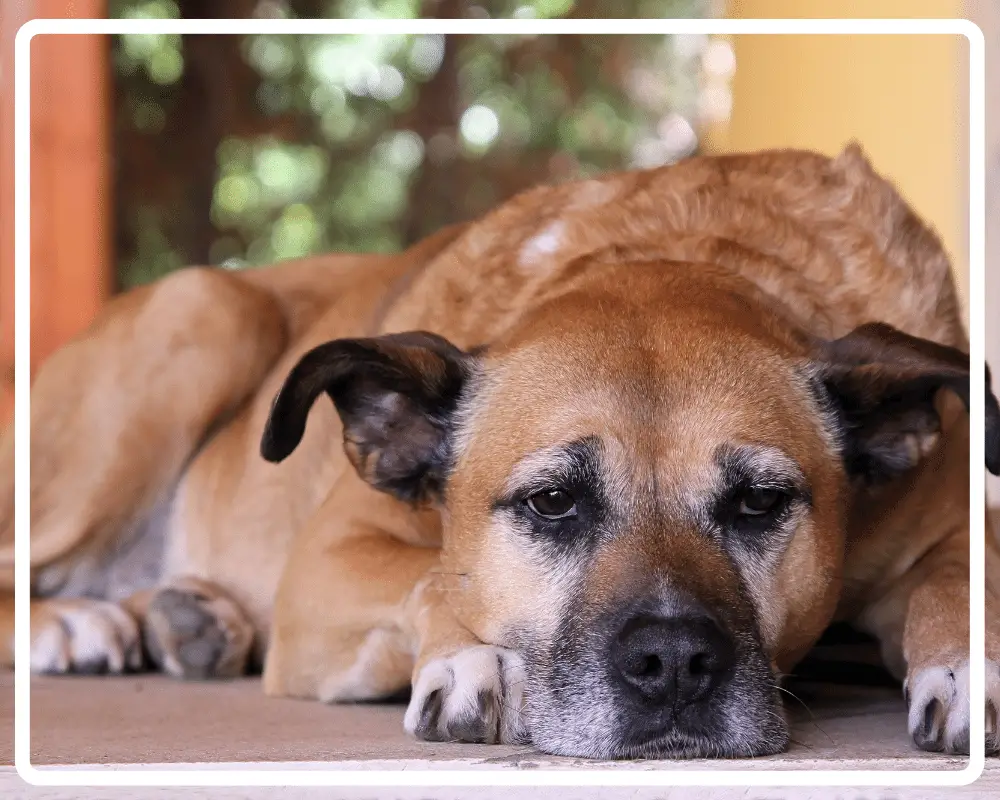
Most dogs withdraw from their people and other dogs when they are dying. This is a leftover that still connects them with the wolf and has very pragmatic reasons.
If a wolf senses he is dying, he leaves his pack. He looks for a quiet place to die there alone. That sounds terribly sad and frightening to us. But the wolf does it to protect his pack.
He is easy prey and could attract predators. If he is dying of an illness, being close increases the risk that his pack could catch it from him. So he creates distance so nothing happens to his pack during his dying phase.
If your old dog needs a lot of rest and prefers to be alone, that does not automatically mean he is dying. Many seniors need more rest and therefore withdraw from everyday life. That is normal and is related to their increased need for sleep in old age.
If it happens suddenly or increases a lot, it can indicate that his end is near.
4) Fear, confusion, and uncharacteristic behavior
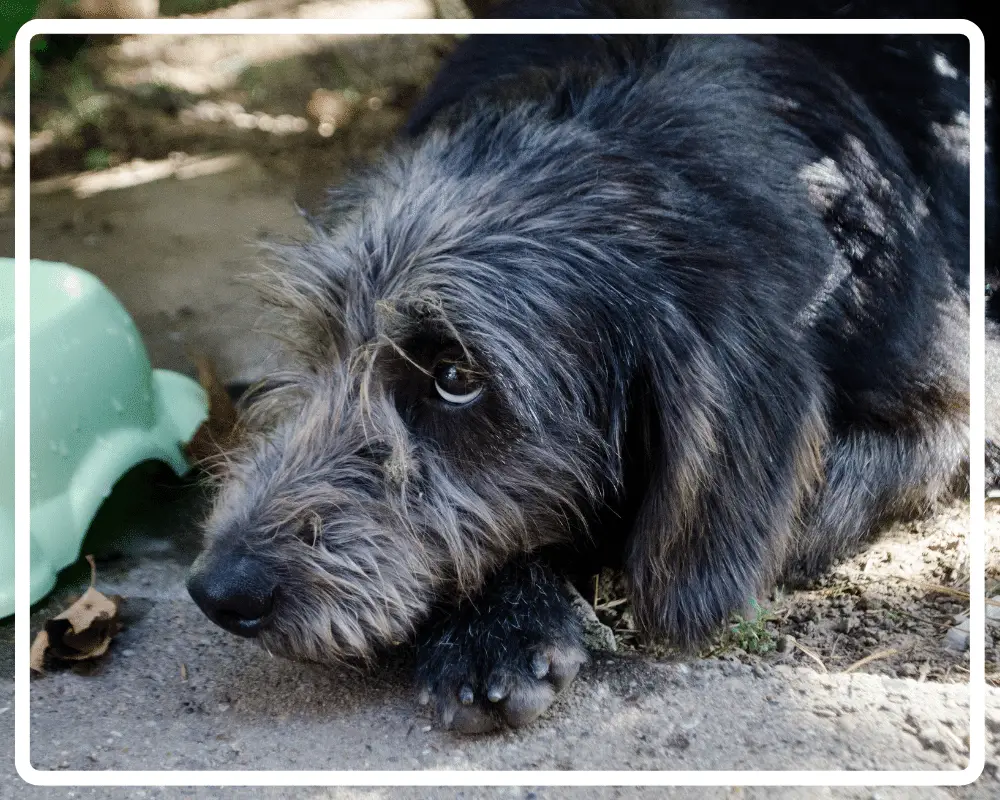
Because the body gradually shuts down during the dying process, fear and confusion can occur.
Among other things, hormones are responsible for this, which your dog no longer releases in normal amounts shortly before his death. He also senses that something is wrong with him, which can trigger additional fear.
Some people experience hallucinations at the end as well. For example, they believe they see friends who died long ago coming to pick them up.
You could say their brain is playing tricks on them. But who can assure us that is not really the case?
Fear and confusion, and possibly pain, lead some dogs to odd behavior. They do things they would never normally do.
Contrary to the distance mentioned earlier, some dogs now seek the closeness of their owners. They hope for protection and reassurance.
Others become aggressive, scratch at doors, or suddenly develop an aversion to certain people in the household.
All of this can, but does not have to, point to their approaching death.
Can an animal consciously decide that it is time for its life to end?
Yes, an animal can. Even if they do not understand death the way we do, animals can decide to die. That is rare, but it cannot be ruled out.
The animals then show similar behaviors to those I just described. It is especially likely that they stop eating and drinking. I even know of such a case.
The cat was completely healthy. At least that is what our tests showed. Blood was fine, no abnormalities on X-ray or ultrasound. The cat had no detectable diseases. She simply decided for herself that 17 years were enough.
In this case, the owner had the cat put to sleep. She did not want to force-feed her, but she also did not want to watch her starve.
The 3 stages of dying in dogs
Experts divide dying into different numbers of phases. For dogs, it is usually described as three phases.
Fewer and fewer dog owners experience these phases with their four-legged friends. After all, most dogs are simply euthanized in old age and do not experience a natural death.
Phase 1: Refusing water and food
The first phase begins with the already mentioned refusal of food and water. It can stretch over several days in which your dog no longer takes in anything.
Even liverwurst, chicken hearts, and the pig ear are refused. In this phase your dog will also become calm and move very little.
Phase 2: Urge to move
The second phase of dying is characterized by movement. Your dog uses up his last energy reserves. These could prolong the dying process.
It is also quite possible that he has this urge to move because he does not know what is happening to him.
It is similar with people with dementia. In a certain phase of the illness, patients want to move as much as possible. They are still far from dying at that point.
Even though he is moving so much now, he will still not take in any food. Many dog owners initially see this urge to move as an improvement in his condition. That is not the case.
The second phase of dying can also last several days.
Phase 3: Muscle cramps & unconsciousness
Once the third phase is reached, your dog will hardly be able to move. He will only lie in one place. If he tries to get up, it usually fails and he only topples from one side to the other.
There are now repeated muscle cramps that can become full seizures. Your dog no longer has control over his sphincter muscles. He loses urine and feces under himself.
Hardest for the owner is the howling, crying out, and barking that occurs during this phase. Your dog is now barely conscious.
He is not crying out from pain, but probably from confusion and being overwhelmed. Sometimes the sounds are also described as life leaving his body. It is still very hard to bear.
The third phase can also last several days. Sometimes it is over after just a few hours and the dog has completed his final journey.
Can I make dying easier for my dog?
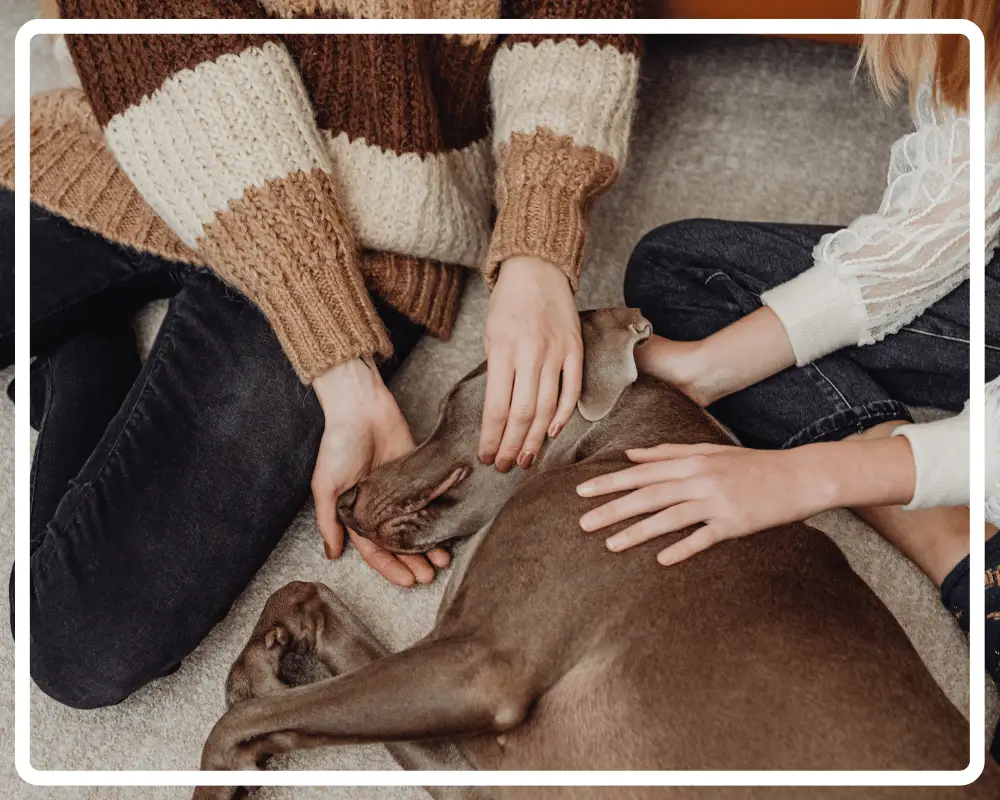
Absolutely. Be there for him, stay calm as far as possible, and let him do what he wants to do. If your dog needs support, give him closeness. Your feelings transfer to your dog.
If you are distraught, your dog will also suffer more. As hard as it is, you need to be strong for your four-legged friend right now. That makes the time as pleasant as possible for him.
Even the seemingly purposeless urge to move in the second phase is important for your dog. Let him walk as much as he wants.
When euthanasia (putting to sleep) is the right step
With euthanasia, your dog receives a medication that relaxes his heart and breathing muscles. Before that he is put under anesthesia and from that point on he does not perceive anything.
The entire procedure takes only a few minutes, but of course it interferes with the normal dying process. You can find more information on the topic in this video.
No one can tell you for sure when the right time has come or whether release through euthanasia is necessary for you.
If you want to spare him and yourself the third phase, which is truly hard to watch, I would advise it. The same applies if he is in pain.
Does a dog sense when he is dying? Conclusion
Dogs have very fine antennae. It is almost impossible that they do not notice the changes that occur in the body while dying. Whether they associate them with death approaching is another question.
What is certain is that most dogs show similar behaviors when they are dying. They refuse their food and withdraw. That does not always mean that a dog is dying, but it can be a sign.
Looking at the dying phases, I am grateful for the option to let our dogs fall asleep peacefully. Which path you want to take with your dog is of course your decision.
Frequently asked questions
What is the best way to say goodbye to my dog?
Be there for him, provide a sense of safety, and let him do what he wants to do.
How long does the final phase of dying last in dogs?
The final phase can last a few hours or stretch over several days. Unfortunately, no one can say in advance.
When is it time to put a pet to sleep?
Before euthanasia, veterinarians weigh whether the animal has quality of life and whether pain can be controlled with medications. When the right time for euthanasia has come is an individual decision made jointly by veterinarian and owner.