
Which Dogs Shed the Most?


If you feel like dog hair sticks to every shirt you own, you are not alone. Some breeds drop far more fur than others, and knowing which ones shed the most can save you time, money, and effort.
Dogs with thick double coats—such as Akitas, Siberian Huskies, Alaskan Malamutes, German Shepherds, Golden Retrievers, and Labrador Retrievers—tend to shed the most. These dogs lose hair year-round, and many “blow” their coats during seasonal changes, which means even more loose fur around your home.
Before you choose a dog, you need to know what causes heavy shedding and which popular breeds top the list. When you understand how coat type, season, and care affect shedding, you can decide if you can handle the extra grooming and cleanup.
Top Dog Breeds That Shed the Most
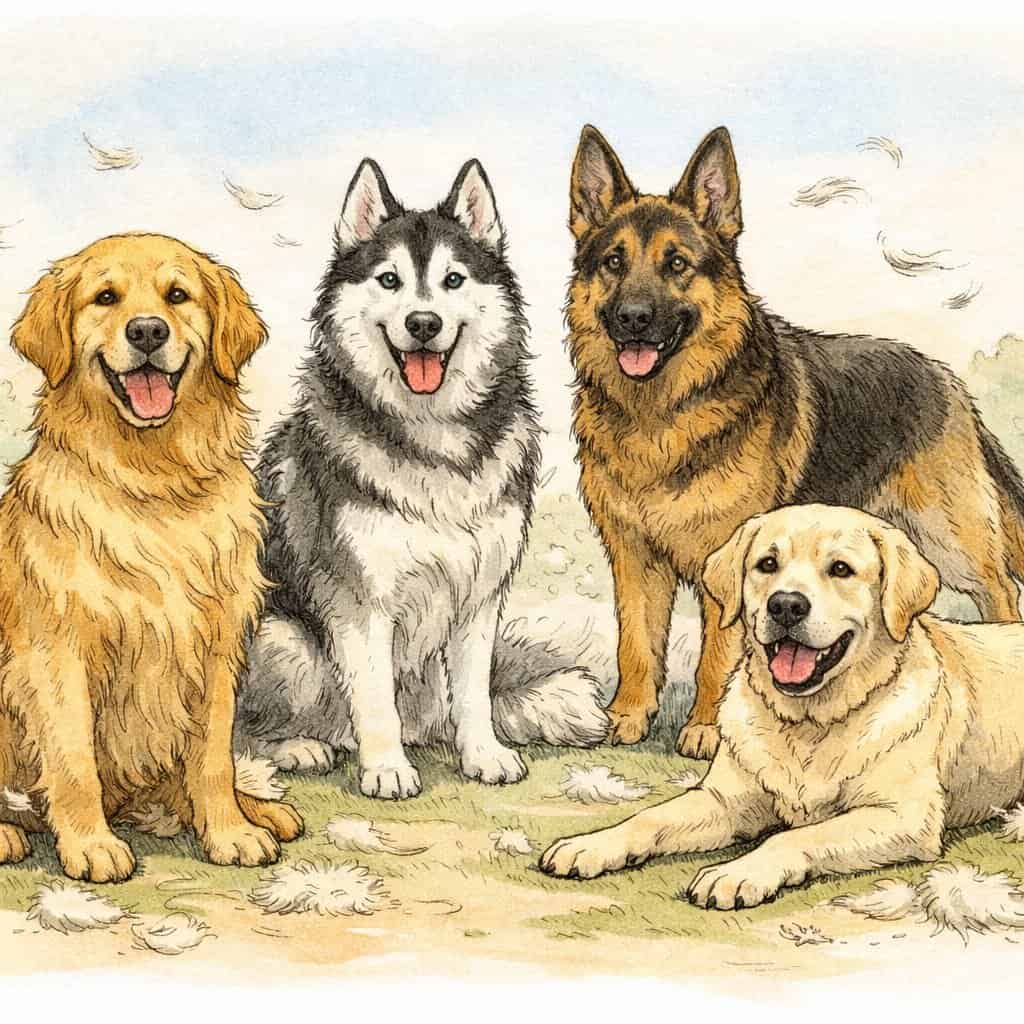
Some dogs drop hair in small amounts, while others leave thick clumps on your floor and clothes. Breeds with dense double coats and large body size often shed the most and need steady grooming.
Double-Coated Breeds Known for Heavy Shedding
If you choose a double-coated breed, expect heavy shedding at least twice a year. These dogs have a soft, thick undercoat beneath a coarser top layer. When seasons change, they “blow” their coat and lose large amounts of fur over a few weeks.
Common heavy shedders include:
- Akita – Thick plush coat; heavy year-round shedding with big spikes in spring and fall.
- Siberian Husky – Dense undercoat; sheds heavily during seasonal changes.
- Alaskan Malamute – Built for cold weather; drops large amounts of fur twice a year.
- German Shepherd – Sheds all year and increases shedding in spring and fall.
You will see loose hair on floors, furniture, and clothing. Daily brushing during peak seasons helps control buildup. Without regular grooming, the undercoat can mat and trap dirt.
Popular Breeds With Year-Round Shedding
Some of the most loved family dogs also shed a lot. Their coats may not look extreme, but they release hair throughout the year.
Well-known examples:
- Labrador Retriever – Short, dense double coat; steady shedding year-round.
- Golden Retriever – Thick water‑repellent coat; sheds daily with heavier spring and fall periods.
- American Eskimo Dog – Fluffy white coat; frequent shedding that shows easily on dark clothes.
You may notice fur on couches, car seats, and bedding almost every day. Weekly brushing helps, but during heavier periods you may need to brush several times a week.
These breeds suit active families, but you must accept regular cleanup as part of ownership.
Large Dogs Prone to Significant Shedding
Large dogs produce more fur simply because they have more body surface. When they shed, the amount feels much greater than with small breeds.
Breeds such as the Bernese Mountain Dog, Great Pyrenees, and Newfoundland have thick coats designed for cold climates. They shed year-round and heavily during seasonal changes.
You may fill a brush with hair in a single session. Vacuuming several times a week often becomes routine.
Regular grooming reduces loose fur in your home and helps you check for skin issues. If you prefer a tidy space with little effort, these large heavy shedders may not fit your lifestyle.
Factors That Affect Shedding in Dogs
Several clear factors shape how much fur you find on your clothes and floors. Your dog’s coat type, the time of year, and their diet and health all play a direct role in how much hair they lose.
Coat Type and Texture
Your dog’s coat type and texture strongly affect how much they shed. Double-coated breeds, such as Huskies, German Shepherds, and Labrador Retrievers, usually shed more than single-coated breeds. They have a soft undercoat beneath a tougher topcoat, and that undercoat releases large amounts of fur.
Short hair does not always mean less shedding. Breeds like Beagles and Pugs have short coats but can shed heavily. Their stiff hairs can stick to fabric and furniture.
Curly or wiry coats often trap loose hair. Poodles and Schnauzers still shed, but much of the loose fur stays in the coat until you brush it out. This makes regular grooming important.
In simple terms:
- Double coat: Heavy, seasonal shedding
- Single coat: Usually lighter shedding
- Curly/wiry coat: Trapped hair, needs frequent brushing
Seasonal Shedding Patterns
Many dogs shed the most in spring and fall. Changes in daylight and temperature trigger the hair growth cycle. In spring, your dog drops their thick winter undercoat. In fall, they shed lighter summer hair to grow a denser coat.
Some dogs shed heavily in peak months like May and November, depending on climate. If you live in an area with strong seasonal shifts, you may notice clear waves of fur during these times.
Indoor living can change this pattern. Artificial light and steady indoor temperatures may cause lighter shedding throughout the year instead of sharp seasonal spikes.
Climate matters too. Dogs in warm regions may shed more evenly year-round, while dogs in colder areas often “blow” their coat during seasonal changes.
Diet and Health Influences
What you feed your dog shows up in their coat. A balanced diet with enough protein and healthy fats supports steady hair growth and normal shedding. Poor nutrition can lead to dull fur and excess hair loss.
Omega-3 and omega-6 fatty acids help keep skin healthy. Dry, irritated skin can increase shedding.
Health issues can also raise shedding levels. These include:
- Skin infections
- Parasites like fleas
- Hormone problems
- High stress
If you notice sudden, heavy shedding or bald spots, contact your veterinarian. Normal shedding should not cause red skin, sores, or clear patches of missing fur.