
Why Is My Dog Afraid of Cats?


You may notice your dog freeze, hide, or shake when a cat enters the room. This reaction can feel confusing, especially if your dog is larger or usually confident. The tension often builds fast and makes daily life stressful.
Your dog is likely afraid of cats because of a past scary experience, confusing body signals, or a lack of early exposure to cats. Cats move, stare, and swat in ways dogs often read as threats, even when no harm is meant. One bad moment can leave a lasting fear.
This topic matters because fear can grow if you ignore it. You can learn why the fear started and what steps help your dog feel safe and calm around cats. With the right approach, peace at home becomes possible.
Reasons Dogs Are Afraid of Cats
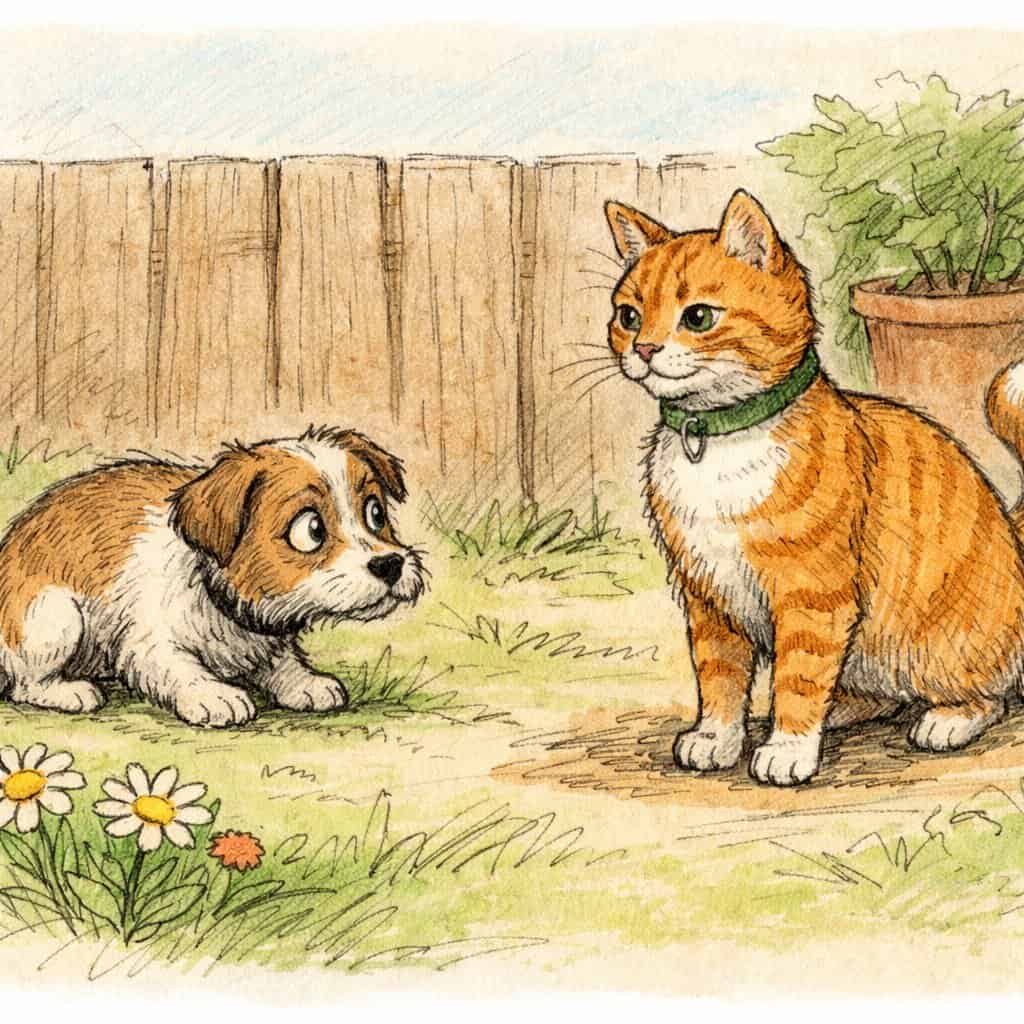
Dogs fear cats for clear reasons tied to experience, learning, and instinct. Sharp claws, fast movements, and early life gaps often shape how your dog reacts when a cat appears.
Past Negative Experiences
A bad moment with a cat can leave a strong mark on your dog. A quick scratch to the nose or a painful swat can teach your dog that cats cause harm. Dogs remember these events well.
Even one incident can change behavior. Your dog may freeze, hide, or bark when a cat enters the room. This reaction helps your dog avoid pain, even if the cat means no harm.
Fear can also grow if the event happened during puppyhood. Young dogs learn fast, and scary moments stick. Over time, your dog may fear all cats, not just the one involved.
Lack of Early Socialization
Dogs learn what feels normal during early life. If your dog never met cats as a puppy, cats may feel strange and unsafe. New sights, smells, and sounds can raise stress.
Cats move in ways dogs do not expect. They jump, stare, and move without warning. Without early exposure, your dog may read these actions as danger.
Dogs raised only with other dogs often struggle more. They lack practice reading cat signals. This gap can lead to fear instead of calm curiosity.
Breed Tendencies
Some breeds react more strongly to cats due to instinct. Herding and hunting breeds often focus on fast movement. A cat running across the room can trigger fear or chase behavior.
Small dogs may also feel at risk. Cats can defend themselves well, and dogs know this. Size does not always mean confidence.
Breed traits do not decide behavior alone. Training and exposure still matter. Still, instincts can shape how your dog reacts before learning kicks in.
Perceived Threats
Cats use clear defense signals. Many dogs see these signs as warnings and back away.
Common cat behaviors that scare dogs include:
- Hissing or growling
- Direct staring
- Fast swats with claws
- Arched backs or puffed tails
Dogs understand these signals as a risk. Even confident dogs often choose caution. Your dog may avoid the cat to stay safe and prevent injury.
How to Help Your Dog Overcome Their Fear of Cats
You can help your dog feel safer around cats with steady practice and calm guidance. Focus on rewards, slow steps, and close attention to behavior so fear does not grow.
Creating Positive Associations
You want your dog to link cats with good things. Start by giving treats, praise, or play when your dog notices a cat from a distance and stays calm. Use small, tasty treats and give them right away.
Keep sessions short and upbeat. End before your dog feels stressed. Repeat often so your dog learns that calm behavior brings rewards.
Avoid forcing contact. If your dog backs away, respect that choice. Calm support builds trust faster than pressure.
Helpful rewards
- Soft treats your dog loves
- Gentle praise in a calm voice
- A favorite toy used only during training
Gradual and Safe Introductions
Plan introductions in steps. Begin with barriers like baby gates or crates so both pets feel secure. Keep the cat free to move and the dog on a leash.
Increase exposure slowly. Start with brief looks, then longer views, then shared space. Move to the next step only when your dog stays relaxed.
Control the setting. Choose quiet times and remove loud noises. Practice daily if possible, even for a few minutes.
Simple progression
- See each other through a gate
- Share a room with space
- Move closer with calm behavior
Monitoring Body Language
Watch your dog closely so you can act early. Fear often shows before barking or lunging. Step in when you see tension.
Use this quick guide to spot signs:
| Calm Signs | Stress Signs |
|---|---|
| Loose body | Stiff posture |
| Soft eyes | Whale eye |
| Slow tail | Tucked tail |
If stress signs appear, increase distance right away. Pause training and help your dog settle. Calm breaks prevent setbacks and keep learning on track.