
Why Does My Dog Howl at Sirens?


You hear a siren in the distance, and your dog lifts their head and starts to howl. The sound can catch you off guard, especially if it happens every time an ambulance or fire truck passes by. You may wonder if your dog feels scared, stressed, or just loud.
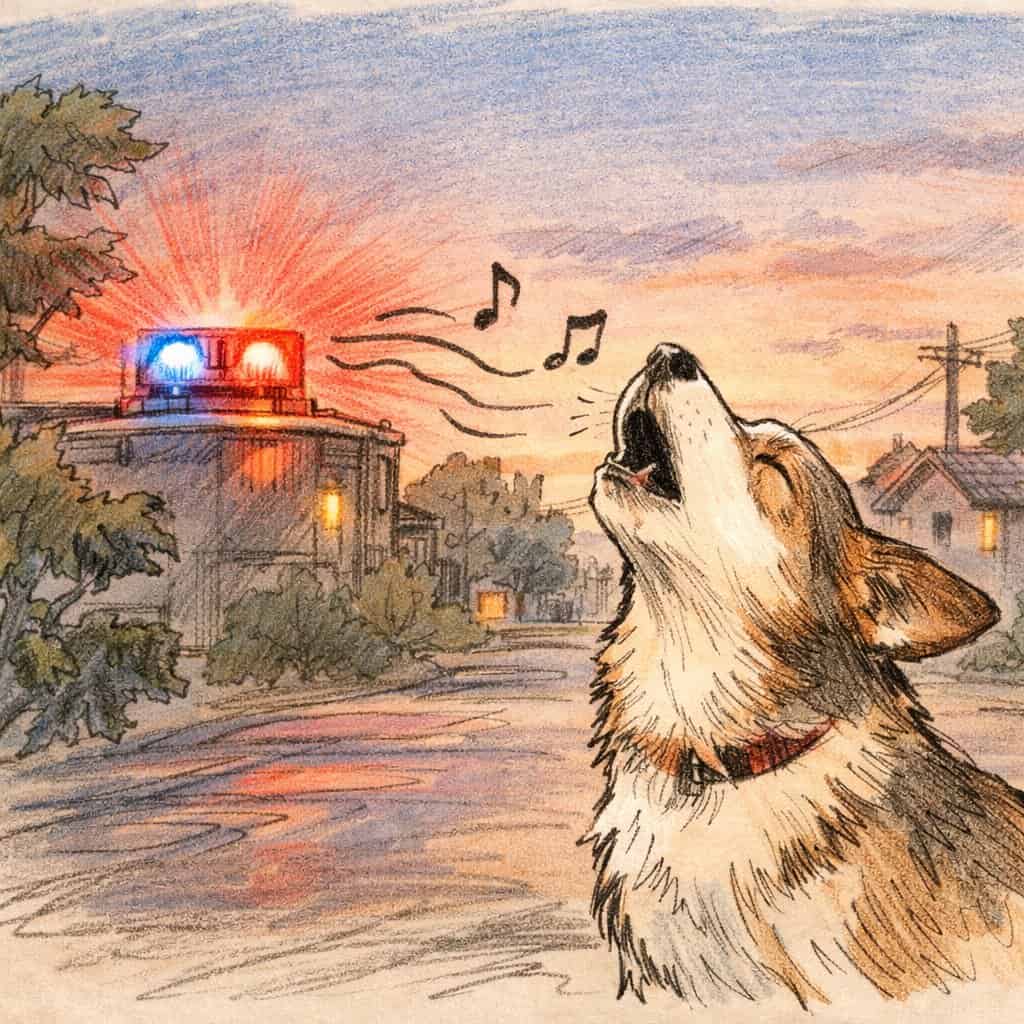
Dogs howl at sirens because the high-pitched sound triggers their instinct to communicate, much like their wolf ancestors howled to talk to their pack. Some dogs think the siren sounds like another dog howling far away. Others react because the noise feels intense or unusual to their sensitive ears.
When you understand why your dog does this, you can respond in a calm and helpful way. You can learn what the behavior means and how to manage it if it becomes too loud or frequent.
Why Dogs Howl at Sirens
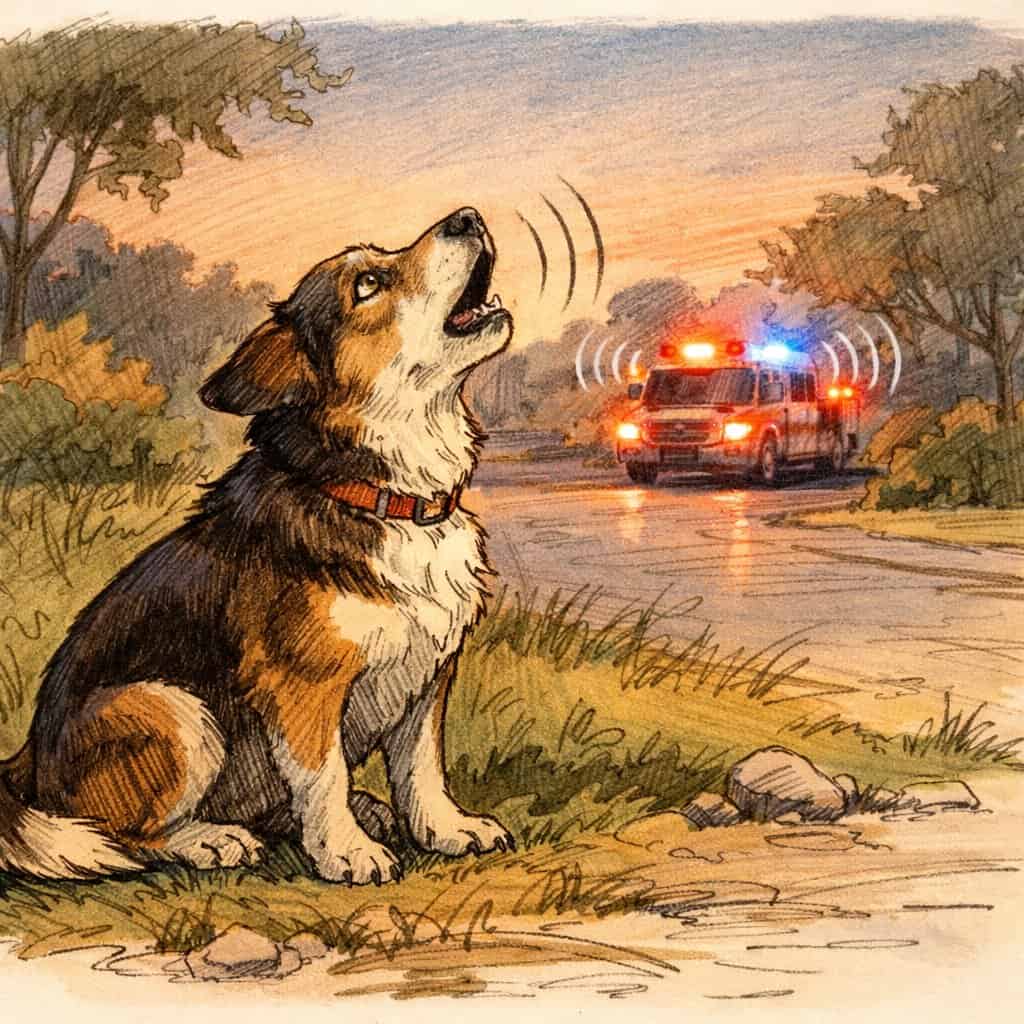
When your dog howls at a siren, instinct and sound both play a role. Their history, hearing ability, social nature, and breed traits all shape this response.
Instinctual Behavior and Ancestry
Your dog shares ancestry with wolves, and wolves use howling to stay in touch with their pack. They howl to locate each other, warn rivals, and mark territory.
A siren’s long, rising and falling tone can sound similar to a wolf’s howl. Your dog may answer it without thinking. This response links back to survival instincts, not disobedience.
Howling also helps dogs feel connected. In the wild, group howling strengthens bonds. When your dog joins a siren, they may react to what sounds like another dog calling in the distance.
You might notice your dog stands still, lifts their head, and lets out a long howl. That posture mirrors wolf behavior. It shows that this habit runs deep in their genetic history.
Dogs’ Hearing Sensitivity to Sirens
Your dog hears sounds at much higher pitches than you do. They can detect frequencies up to about 45,000–65,000 hertz, while you hear far less.
Sirens produce loud, high-frequency sounds designed to cut through traffic noise. Those sharp tones grab your dog’s attention right away. Even if the siren sounds distant to you, it may seem much closer to them.
Volume also matters. Sirens can reach over 100 decibels at close range. That level can feel intense or even stressful.
Some dogs howl because the sound startles them. Others react because the pitch triggers their natural urge to respond. It is not always fear. Often, it is a mix of sensitivity and instinct.
Communication and Social Connection
Dogs use howling as a form of long-distance communication. When your dog hears a siren, they may treat it like another dog calling out.
By howling back, your dog may try to:
- Signal their location
- Join a “group” call
- Respond to what they think is a pack member
- Express excitement or alertness
If your dog looks calm while howling, they likely see it as social behavior. If they pace, whine, or tuck their tail, stress may play a part.
Your reaction can shape the behavior. If you shout or rush over, your dog may see that as you joining in. If you stay calm, the episode often ends once the siren fades.
Breed Differences in Howling
Some breeds howl more than others. This trait often ties to their original job.
Breeds known for frequent howling include:
| Breed Type | Why They Howl More |
|---|---|
| Hounds (Beagles, Coonhounds) | Bred to use their voice while hunting |
| Huskies and Malamutes | Close link to wolf ancestry |
| Bloodhounds | Strong scent tracking and vocal signaling |
These dogs use sound to communicate during work. That habit carries into home life.
Other breeds, like many retrievers or toy breeds, may bark more than howl. Still, any dog can howl at a siren if the sound triggers them.
If your dog belongs to a vocal breed, expect stronger or more frequent reactions. That pattern reflects genetics, not stubbornness.
What to Do If Your Dog Howls at Sirens
You can handle siren howling with calm guidance and simple training. First, decide if the behavior is normal, then use clear steps to help your dog stay relaxed and quiet.
When Howling Is Normal
In many cases, howling at sirens is normal dog behavior. Sirens sound high and long, much like another dog howling. Your dog may think they hear a distant pack member and respond.
Some breeds howl more than others. Huskies, Beagles, Bloodhounds, and other hounds or Spitz breeds often howl because of their history and instincts. If your dog stops once the siren fades and stays calm otherwise, you likely do not need to worry.
Pay attention to body language. If your dog stands alert but relaxed, then settles down after the noise ends, that is usually harmless.
Contact your vet if you notice:
- Sudden new howling in an older dog
- Signs of stress like shaking or pacing
- Ongoing anxiety after the sound stops
These signs may point to noise sensitivity or another issue that needs care.
Calming Strategies for Sensitive Dogs
If sirens upset your dog, focus on comfort and routine. Act calm and steady. Dogs often take cues from you.
When a siren starts, try these steps:
- Close windows and doors to lower the sound
- Turn on a fan, TV, or white noise machine
- Guide your dog to a quiet room or crate
- Offer a favorite toy or long-lasting chew
You can also create a safe space with a bed and soft blankets. Some dogs relax when they have a covered crate or a small, cozy area.
Avoid scolding or yelling. That can increase fear and make the howling worse. Instead, speak in a normal tone and reward calm behavior with gentle praise or a small treat.
Training Tips to Reduce Howling
You can train your dog to respond more calmly to sirens. Use positive reinforcement, not punishment.
Start by playing a low-volume recording of a siren. When your dog stays quiet, give a treat right away. Keep sessions short, about 5 minutes.
Over time:
- Slowly raise the volume
- Reward quiet behavior
- Pause if your dog starts to howl
This method helps your dog link the sound with rewards instead of stress.
You can also teach a cue like “quiet.” When your dog pauses between howls, say “quiet,” then reward the silence. With practice, your dog will learn that staying calm earns praise and treats.
Stay patient and consistent. Small, steady steps work better than quick fixes.