Why Does My Dog Have Whiskers?


You see those stiff hairs on your dog’s face every day, but they do much more than add character. Your dog relies on them to understand the world at close range and stay aware of what’s nearby.
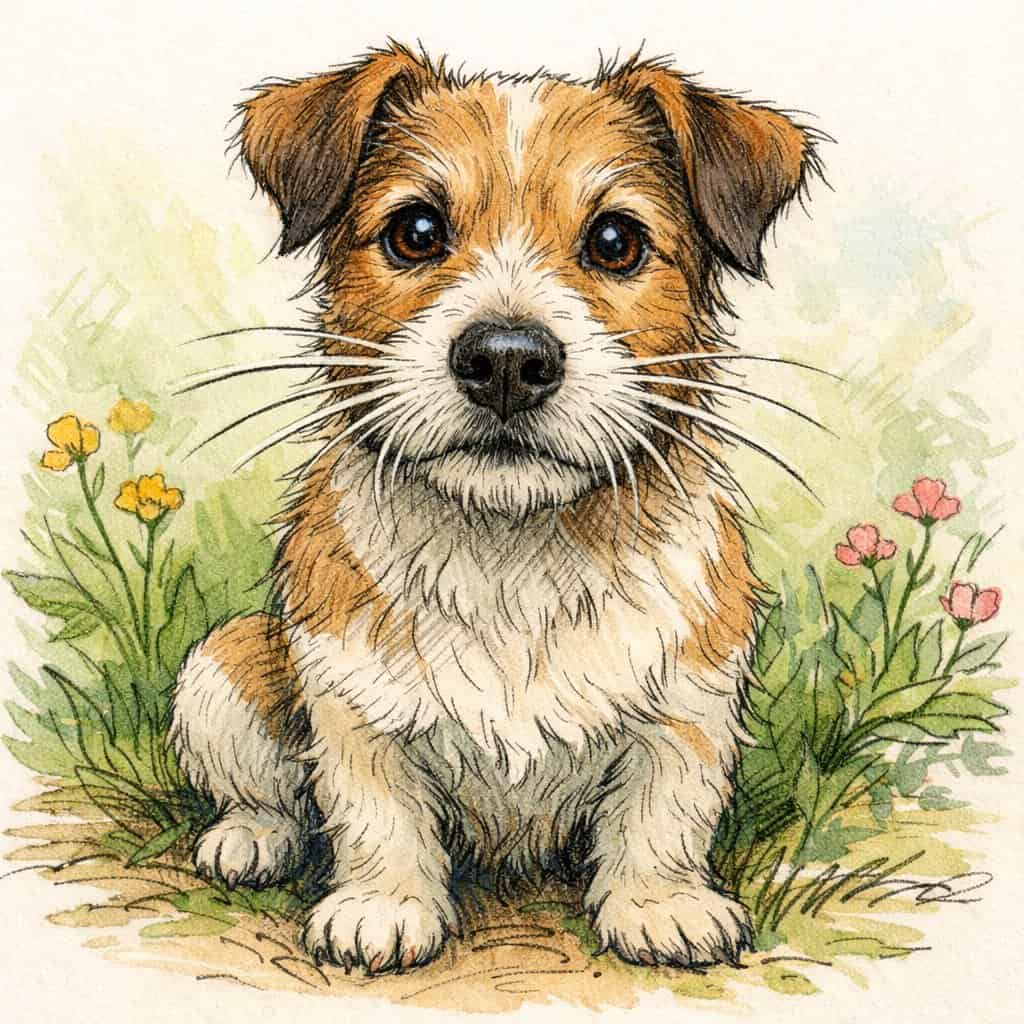
Your dog has whiskers because they act as highly sensitive touch tools that send important information to the brain. Each whisker connects to nerves that detect movement, space, and changes in the air, even without touching anything. This built-in system helps your dog react faster and move with confidence.
As you watch your dog explore, those whiskers guide simple actions like walking in tight spaces, sensing objects in the dark, and reading the environment up close. Once you understand how they work and why they matter, you start to see your dog’s daily behavior in a whole new way.
The Science Behind Dog Whiskers
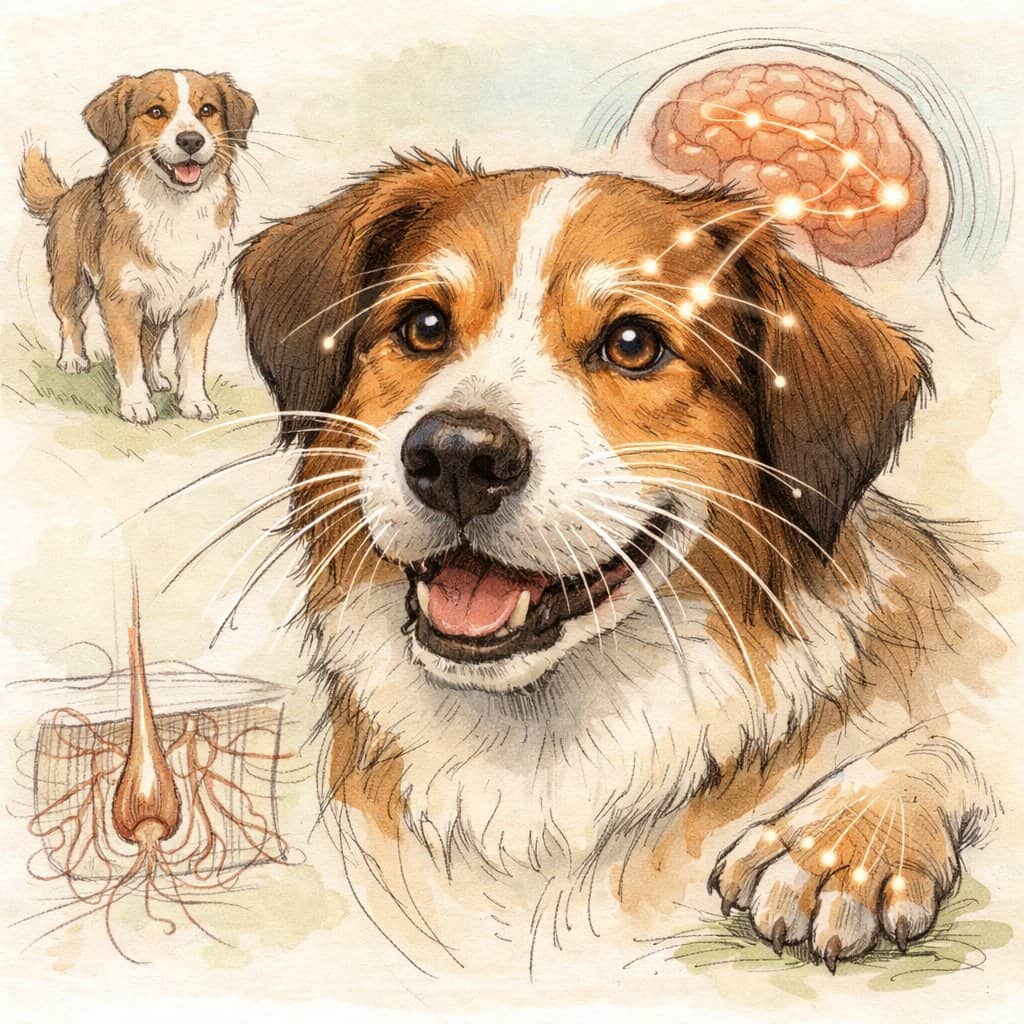
Your dog’s whiskers work as touch sensors, grow in a special way, and come in several types. Each part plays a role in how your dog moves, senses space, and reacts to the world.
Sensory Function of Whiskers
Your dog’s whiskers act as high-sensitivity touch tools. Each whisker connects to nerves at the base, so even small movement sends signals to the brain.
Whiskers help your dog judge space. When your dog nears a narrow gap, the whiskers bend and warn if the body will fit. This helps avoid getting stuck or bumping into objects.
Whiskers also detect air movement. This skill helps your dog sense nearby motion, even in low light. It supports weak vision and adds another layer of safety.
You may notice whiskers move forward or back. This movement can show focus, stress, or curiosity. Dogs use whiskers as part of body language with people and other dogs.
How Whiskers Grow
Whiskers grow differently than regular fur. They start deeper in the skin and attach to a rich nerve and blood supply.
Your dog grows whiskers early in life. Puppies rely on them before their vision fully develops. This early growth helps them explore safely.
Whiskers shed and regrow, but not often. The growth cycle runs slower than normal hair. Cutting them does not cause pain, but it removes key sensory input.
You should avoid trimming whiskers on purpose. Without them, your dog may seem unsure or clumsy for a while.
Types of Whiskers on Dogs
Dogs have several types of whiskers. Each type sits in a specific spot and serves a clear purpose.
| Whisker Type | Location | Main Job |
|---|---|---|
| Mystacial | Sides of the muzzle | Judge width and object distance |
| Superciliary | Above the eyes | Protect eyes and sense motion |
| Genal | On the cheeks | Sense nearby objects |
| Interramal | Under the chin | Detect ground and food position |
Together, these whiskers create a touch map around your dog’s face. This map helps your dog move with more control and confidence.
Everyday Importance of Whiskers for Dogs
Your dog uses whiskers to sense the world up close. These stiff hairs support communication, safe movement, and daily comfort.
Whiskers and Canine Communication
Your dog’s whiskers play a role in how you read their mood. Small muscles move the whiskers forward or back. These shifts often match changes in focus or emotion.
When your dog feels curious or alert, the whiskers may point forward. When your dog feels stressed or unsure, the whiskers may pull back toward the face. You can spot these changes during play, training, or greetings.
Whiskers also help dogs interact with other dogs. Along with ears and eyes, whisker position adds detail to body language. This subtle feedback helps dogs avoid conflict and respond faster in social moments.
How Whiskers Help With Navigation
Whiskers act as touch sensors that send signals straight to the brain. Each whisker connects to nerves that detect small changes in air movement and contact.
Your dog relies on whiskers in tight or dark spaces. They help measure gaps, avoid walls, and protect the eyes from brush or objects. This matters during walks, play, and indoor movement at night.
Whiskers also support dogs with poor vision. They help your dog judge distance and shape at close range. This support lowers the risk of bumps and sudden starts.
Whiskers help with:
- Moving through narrow spaces
- Detecting nearby objects
- Protecting the eyes and face
Whisker Care and Grooming Tips
You should never cut or pluck your dog’s whiskers. Whiskers grow back, but trimming them can cause pain and confusion. Each whisker sits deep in the skin and needs protection.
During grooming, avoid tools near the muzzle, eyes, and jaw. Let the whiskers stay long and natural. Clean the area gently if food or dirt builds up.
If a whisker falls out on its own, that usually causes no harm. Contact your vet if you see swelling, redness, or broken skin around the whisker base.
Quick care guide:
| Do | Avoid |
|---|---|
| Clean gently | Trimming whiskers |
| Use soft brushes | Pulling or plucking |
| Watch for irritation | Using sharp tools |