
What Do Dogs Dream About?


You watch your dog sleep and notice twitching paws or soft sounds. That small moment sparks a big question about what fills your dog’s mind at night. The answer starts with how dogs sleep and what their brains do during rest.
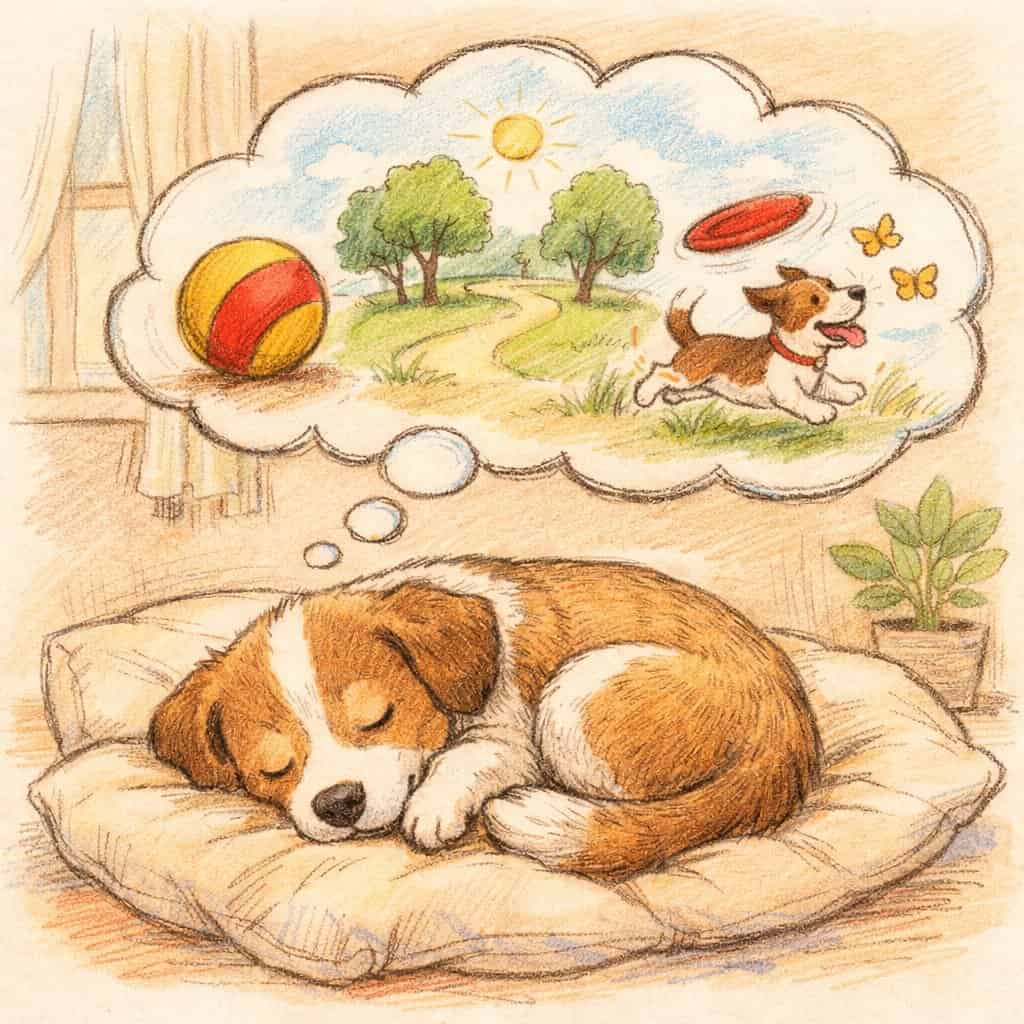
Dogs usually dream about daily life, such as playing, running, eating, and spending time with you. Scientists have found that dogs enter REM sleep, the same stage when humans dream. During this time, the brain stays active and replays recent experiences.
As you learn more, you can start to understand what those movements and sounds may mean. You can also learn how age, habits, and emotions shape what shows up in your dog’s dreams.
What Are Dog Dreams?
Your dog’s dreams link closely to brain activity during sleep, visible body movements, and findings from animal sleep research. Scientists study sleep cycles, behavior, and related species to explain what likely happens when your dog dreams.
REM Sleep and Canine Brain Activity
Your dog dreams during REM sleep, the same sleep stage when people dream most. During REM, the brain stays active while the body rests. This pattern shows up clearly in dogs through brain scans and sleep studies.
A part of the brain called the pons plays a key role. It limits muscle movement so your dog does not fully act out dreams. Puppies and older dogs dream more often because this control works less strongly for them.
Dogs move through sleep cycles faster than humans. Because of this, your dog may enter REM sleep many times each night, which increases the chance of dreaming.
Common Behaviors Observed While Dogs Dream
You can often spot a dreaming dog by watching their body. These movements happen during REM sleep and usually match dream activity.
Common signs include:
- Light paw movements or running motions
- Small barks, whines, or growls
- Ear flicks or tail twitches
- Rapid eye movement under closed lids
These actions often reflect normal daily behavior. A dog that loves to run may move its legs. A dog that guards the house may growl softly. Most dreams appear calm. If your dog seems upset, gently speak instead of waking them suddenly.
Scientific Research on What Dogs May Dream About
Scientists do not know exactly what your dog sees in dreams. Direct studies on dog dreams remain limited. Still, research on other animals helps fill the gap.
Rats dream about mazes they ran earlier. Birds rehearse songs while asleep. Dogs share similar brain structures and sleep patterns with these animals. This supports the idea that dogs replay daily experiences in dreams.
Based on behavior and brain activity, experts believe your dog likely dreams about familiar things, such as:
| Likely Dream Content | Why It Matters |
|---|---|
| Playing or running | Matches frequent daytime activity |
| Food or feeding time | Strong reward-based memory |
| People or other pets | Emotional bonds shape memory |
These patterns suggest dreams help your dog process daily life and emotions.
Interpreting the Content of Dog Dreams
Your dog’s dreams often reflect daily life, age, and breed traits. You can learn a lot by noticing patterns in movement, sounds, and timing during sleep.
Possible Scenarios Dogs Experience in Dreams
Your dog likely dreams about familiar actions and places. Research on animal sleep suggests dreams replay waking experiences, much like in people.
Common dream themes include:
- Running or chasing, shown by leg paddling
- Playing with other dogs or you, shown by tail flicks
- Exploring known spaces, shown by sniffing motions
Dreams tend to focus on routine events. A dog that hikes often may dream about trails. A dog that trains daily may dream about cues and rewards. These scenes usually match what matters most to your dog during the day.
Breed and Age Influences on Dream Patterns
Breed size and age affect how your dog dreams. Studies note that small dogs dream more often, but their dreams stay short. Large dogs dream less often, but their dreams last longer.
| Factor | What You May Notice |
|---|---|
| Small breeds | Frequent twitches, brief movements |
| Large breeds | Longer stillness, slower movements |
| Puppies | More active sleep and vocal sounds |
| Senior dogs | Lighter sleep, shorter dream cycles |
Puppies process new skills and sights, so they dream more. Older dogs may wake easier, which can interrupt dreams.
How Everyday Activities Shape Dreams
Your dog’s day strongly shapes dream content. Physical activity, learning, and stress all play a role.
After a busy day, you may see more movement during sleep. Training sessions often show up as repeated paw or mouth motions. Calm days can lead to quieter dreams.
Stressful events may also appear in dreams. A loud storm or vet visit can cause restlessness later that night. Keeping routines steady helps your dog settle into calmer sleep patterns.
Recognizing Signs of Pleasant or Distressing Dreams
You can spot the tone of a dream by watching your dog’s body language. Most dreams stay pleasant and harmless.
Signs of pleasant dreams
- Soft tail wags
- Gentle paw movements
- Quiet whimpers
Signs of distress
- Sudden stiffening
- Sharp cries or growls
- Rapid breathing
If your dog seems upset, speak softly or gently call their name. Avoid shaking them awake, as that can cause fear.