Does My Dog Think I’m a Dog?

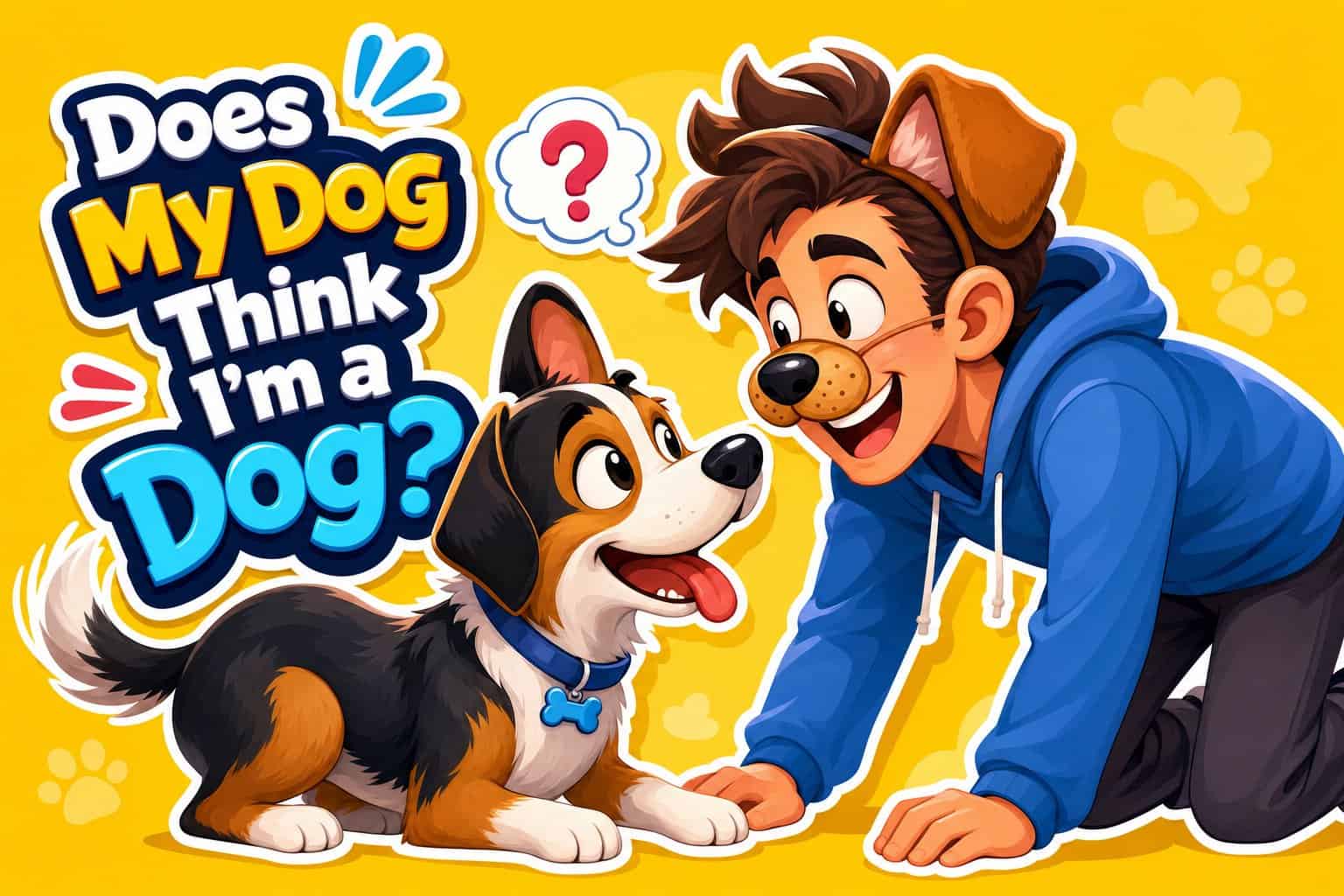
You watch your dog follow you from room to room and wonder what they see when they look at you. Do they think you are just a strange-looking dog? Or do they know you are something different?
Your dog does not think you are a dog, but they do see you as part of their social group and family. Research shows that dogs can tell humans apart from other dogs by our body shape, scent, voice, and behavior, as explained in this guide on do dogs think their owners are dogs.
When you understand how your dog sees you, you can build a stronger bond and communicate more clearly. You will learn how dogs perceive humans and how that shapes the close relationship you share every day.
How Your Dog Actually Sees You
Your dog does not confuse you with another dog. Instead, your dog places you into their social world using smell, behavior, and daily patterns.
They Come From Pack Animals, But That Doesn’t Mean They’re Confused
Dogs come from wolves, and wolves live in family groups. In the wild, these groups include parents and their offspring, not random animals competing for control.
This family structure shapes how your dog relates to you. Many experts explain that dogs often see humans as part of their social group, similar to a pack bond, as described in discussions about dogs seeing humans as members of their pack.
But your dog does not think you are a large, odd-looking dog. Your smell, voice, and behavior clearly signal that you are a different species.
Research and behavior experts note that dogs can tell humans apart from other dogs by scent and appearance, which supports the idea that dogs understand they are not interacting with another dog. Your dog forms a social bond with you, but that bond crosses species lines.
Your Dog Studies You Like a Human, Not Another Dog
Your dog pays close attention to your body and voice. They learn what your gestures mean through daily repetition.
Dogs can:
- Follow your pointing finger
- Notice the direction of your gaze
- Respond to changes in your tone
These skills show that your dog studies you as a human, not as a dog. Dogs rarely use pointing to guide each other, yet many dogs quickly learn to follow a human point.
That tells you they adjust to your communication style. Your dog also learns patterns like when you grab your keys or open a food container.
They connect these actions with specific outcomes. Over time, your dog builds a mental map of your habits, voice cues, and routines.
That learning shapes how they interact with you every day.
Dogs and Humans Speak Different Languages
Dogs and humans communicate in very different ways. Your dog relies heavily on scent, body posture, and subtle facial changes.
Dogs use signals like:
- Tail position
- Ear movement
- Tension in the body
- Direct or indirect eye contact
Humans rely more on spoken words. Your dog does not understand full sentences, but they can learn specific words and tones.
Dogs also avoid long direct stares with other dogs because it can signal conflict. Yet many dogs learn that eye contact with you can mean attention or affection.
Your dog adapts to your human signals while still using natural canine behaviors. They know you are different, and they adjust instead of treating you like another dog.
Building a Bond Across Species
Your dog does not see you as another dog, but as a trusted social partner. You build that bond through scent, body language, learning, and daily shared routines.
Scent and Body Language Do the Heavy Lifting
Your dog relies on scent more than sight. Your natural smell, your home, and even your shoes help your dog know you belong together.
Research shows that dogs form strong attachment bonds with humans that support emotional well-being and connection, as explained in this article on the science of pet attachment. Your scent plays a big part in that bond.
Body language matters just as much. Dogs watch:
- Your posture
- Your hand movements
- Your facial expression
- The tone of your voice
If you stand tall and stiff, your dog may pause. If you kneel, soften your voice, and make slow movements, your dog often relaxes.
Clear, calm signals help your dog feel safe with you.
Your Dog Is Watching You All the Time
Your dog studies you every day. Dogs use social intelligence to read human behavior, and research described by the American Psychological Association on how dogs think shows that dog-human bonds combine traits of friendship and parent-child relationships.
You teach your dog through patterns. For example:
| Your Action | What Your Dog Learns |
|---|---|
| Picking up the leash | A walk is coming |
| Grabbing keys | You may leave |
| Saying their name calmly | Focus on you |
Dogs do not think you are a dog. They recognize that you are human by your shape, voice, and scent, as explained in this article about whether dogs think their owners are dogs.
When you stay consistent, your dog feels secure. Clear rules and steady routines reduce stress.
Small Daily Actions Build the Strongest Bond
You strengthen your bond through daily action, not big gestures.
Short training sessions, regular walks, and quiet time together build trust.
Use simple commands and reward quickly.
Praise, gentle touch, or a small treat right after good behavior helps your dog connect the action with the reward.
Pay attention to your dog’s signals.
A wagging tail held high means something different from a low, slow wag.
Ears back, lip licking, or turning away can signal stress.
Set aside focused time each day without distractions.
Put your phone away.
Make eye contact.
Speak in a calm tone.