Age-Related Hearing Loss in Dogs: Tips for Your Hard-of-Hearing Senior Pup

As dogs get older, many develop a few problems. Some struggle with their joints, in others the kidneys no longer work perfectly. Some suddenly become hard of hearing.
White dogs are often deaf. Those with merle coloring also more frequently suffer from congenital deafness. Age-related deafness, on the other hand, can affect any dog, no matter what color. Why this happens with age, what you can do, and whether there is a way to prevent age-related deafness is what I’m sharing with you today.
Age-related deafness in dogs
Age-related deafness is caused by worn hair cells in the inner ear and cannot be treated. Often dogs can still hear low tones at first before they become completely deaf. By avoiding noise and cigarette smoke and by having existing illnesses in your dog treated, you lower the risk of age-related deafness.
What is age-related deafness? Causes of deafness in dogs
Age-related deafness refers to age-related wear and tear in your dog’s ear. It initially leads to hearing loss. Over time, this can develop into complete deafness. The causes are not pathogens, eardrum injuries, or toxins.
It is also not a genetic problem like the one Dalmatians often have. Susanne Kluth and Prof. Dr. Ottmar Distl investigated in 2013 what exactly leads to deafness in this breed.
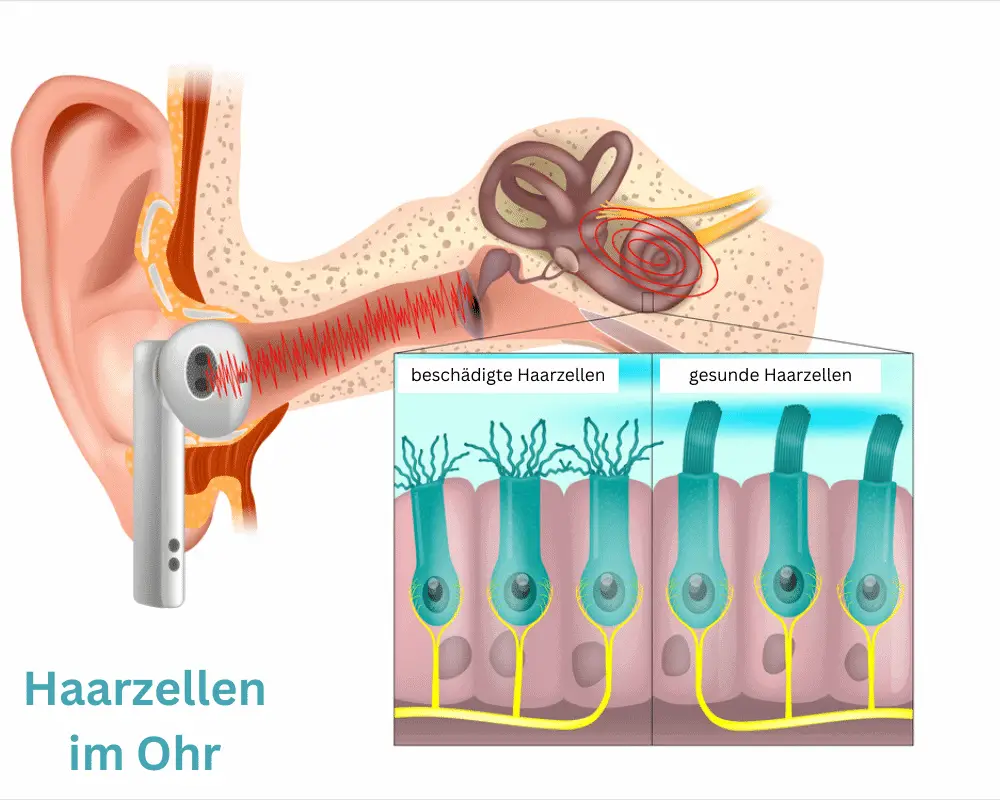
Just like your dog, his ears age too. They wear out, which makes your four-legged friend hear less well. The hair cells in the ear are responsible for age-related deafness. They normally ensure that sound waves are converted into electrical activity.
The brain can process these signals. Only then does your dog hear.
How do hair cells work?
Every sound that reaches your dog’s ear sets the hair cells in motion. Eventually they break because of this. As a result, the sound is no longer processed at that spot, so the signal does not reach the brain. The hair cells sit in the cochlea in the inner ear. The farther out they are located, the faster they wear out. Amplifier cells are located on the very outside.
At the beginning of age-related hearing loss, everything gets quieter and more muffled. After that, high tones often disappear. However, I have also met senior dogs that only responded to high frequencies. They could no longer perceive low tones.
4 signs to recognize age-related deafness in your dog
Do you suspect age-related deafness or hearing loss in your pup? There are several symptoms that point to it. You can also test your dog’s hearing.
A loss of hearing can only be reliably diagnosed with a hearing test at the vet.
🔍 Sign #1: Startling easily
When we walk up to our dogs, our hand automatically goes to their head or back to pet them. For hearing dogs, that’s no problem. They don’t need to see us, because our footsteps coming their way let them know we are there.
If your dog is becoming hard of hearing, he won’t hear you coming. Then your hand on his body can really startle him. Some dogs just flinch. Others whine and pull away.
Still others whirl around and snap out of fear. If you notice increased startle response in your senior dog, that could point to age-related deafness.
🔍 Sign #2: “Ignoring” commands
At the beginning of age-related deafness, everything gets quieter and more muffled. Your dog will probably still understand familiar commands. With commands you use less often, he might struggle.
As volume perception drops, so does his ability to hear certain consonants. S and F are especially affected. Those sounds are high and relatively quiet. “Sit” might become hard for your dog fairly early.
With age-related deafness, it may seem like your dog is ignoring your commands. In reality, he no longer fully understands them, so he doesn’t know what you want from him.
🔍 Sign #3: Favorite sounds go unanswered
Dry food rattling into the bowl, the sound of the can opener, or the jingle of the leash — most dogs can easily associate these sounds. They usually respond quickly.
If that stops, it could be hearing loss or deafness. Hardly any dog skips a meal. And when it comes to walks, most pups are convinced they need to show up fast. Otherwise you might head out without them.
Keep in mind, though, that a lack of response can also point to another illness. If your dog is nauseous or in pain, he may not be interested in food or walks.
🔍 Sign #4: Your dog only responds to certain pitches
A fairly reliable clue for age-related hearing loss is when your dog only responds to certain frequencies. Call your dog when he cannot see you. Try different pitches. He will likely not react to high tones, while he responds when you speak in a deeper voice.
The hair cells in the inner ear responsible for high tones wear out faster. That is why it is more likely that your pup will no longer hear high tones as he ages. It can be the other way around, though. As I said, I have seen both in senior dogs.
Can you prevent age-related deafness?
Unfortunately, there are no treatment options for age-related deafness in dogs. The worn hair cells in the ear are gone. Your dog will not regain his hearing. If your dog is not at that point yet, you can help prevent it from developing. Here are 4 tips:
- Avoid noise,
- do not expose your dog to cigarette smoke,
- watch his heart health, and
- avoid strong blood sugar fluctuations with diabetes.
💡 Tip #1: Avoid noise
Why noise is bad for your dog’s ears is probably clear. In short: the hair cells in the cochlea vibrate with every sound. The louder the sound, the stronger the vibration. Picture the hairs like tall grass in the wind. Strong wind makes more blades bend. That is exactly what noise does in your dog’s ear.
The more hair cells your dog loses to noise, the more limited his hearing already is in old age. On top of that is normal wear and tear. A dog that often has to endure loud noise will probably develop age-related deafness earlier and more severely.
💡 Tip #2: Cigarette smoke
Secondhand smoke is just as harmful to dogs as it is to people. Never smoke in the house. The best thing, of course (for you, too), would be to quit entirely. Whether cigarettes and hearing loss are truly linked is not fully understood.
There are different study results. In 1988 a research team showed a connection, while a more recent study from the University of Wisconsin–Madison could not find one.
It is conceivable that nicotine promotes hearing loss. It causes blood vessels to constrict, so less blood can flow through. That happens throughout the body when you smoke. Tiny capillaries already allow little blood through. These spots are particularly at risk of under-supply.
Theoretically, nicotine could lead to insufficient blood flow to the inner ear. That would cause more cells to die.
💡 Tip #3: Heart health
As dogs age, heart problems become more likely. Many pups suffer from high blood pressure, which can affect many areas of the body. Left untreated, high blood pressure can lead to kidney problems, retinal detachment, and hearing loss.
By having your dog examined regularly, you reduce the risk that heart disease goes unnoticed. With the right medication, mild heart issues are no problem for your dog. The medications also prevent the secondary diseases.
💡 Tip #4: Diabetes
Dogs develop type 1 diabetes most often. This type requires lifelong insulin therapy. Without insulin, a dog with diabetes would not survive for long. If your dog has diabetes, it is important to keep an eye on his blood sugar levels.
Consistently high levels strain his internal organs and can lead to vision and hearing loss. High tones in particular seem to suffer in diabetics. That fits with age-related hearing loss.
They also become more sensitive to noise and more prone to balance problems. Diabetes is not curable. If your dog has it, your only option is to manage his levels as well as possible. You will not be able to prevent the occasional spike or dip.
Overall, though, your four-legged friend should have readings in the normal range to prevent long-term complications from the disease.
5 tips for everyday life with a deaf dog
If a dog with age-related deafness lives with you, you will probably need to adjust your approach a bit. You can find what to watch for in the following points.
💡 Tip #1: Visible signals
As your dog hears less and less, you need to rely on visual cues. Pair important commands with hand signals. Ideally, you start before hearing loss sets in. But even if your dog is already hearing less, it is not too late.
The visible signals replace the spoken cue so you can still understand each other. That also applies when you just want to pet your pup. Make sure he has seen you before you touch him.
If your dog is sleeping, proceed as shown in this Video.
💡 Tip #2: Reflectors
Add reflectors to the leash and harness. If your dog does not hear well anymore, he will be slower to respond to you on walks. Reflectors make sure drivers can see him.
💡 Tip #3: Slow movements
Bring a bit more calm to your movements. Without his hearing, your dog needs more time to understand you. Rushing only makes him nervous. Make sure your dog gets the time he needs.
💡 Tip #4: Lots of patience
Hearing loss is an adjustment for your dog. He does not want to annoy you or misunderstand you on purpose. So stay patient and show understanding for his situation.
That does not mean you have to let obvious misbehavior slide. But keep reminding yourself that your dog cannot hear well.
💡 Tip #5: Vibration collar?
In connection with hearing loss, you will often read about vibration collars for dogs. These are meant to make communication easier. The collar vibrates and activates the dog. That makes him more receptive to further cues, such as commands.
I am not a fan of these collars. Every time it vibrates, your dog is startled. The vibrations are nothing other than the sudden touch you are trying to avoid. That is why I would advise against these collars. If you use one at all, only do so together with an experienced dog trainer.
My senior dog is suddenly deaf: the bottom line
Age-related deafness is unfortunately a normal occurrence in senior dogs, and there is nothing you can do to reverse it. At least the deafness does not affect other areas of life, since it is due to wear and tear and not pathogens.
If you are not at that point yet, you can take preventive steps. Preventive measures only keep your dog’s ears from being overtaxed, though. Normal wear and tear still occurs and can lead to hearing loss as they age.
Even though hearing is important for dogs, you do not need to worry. Dogs can handle this change.
Frequently asked questions
How can you tell a dog is no longer hearing?
A deaf dog does not respond to commands and will not react to favorite sounds like food falling on the floor. Some dogs start barking persistently as hearing loss begins.
Can deafness in dogs be cured?
Many cases of deafness in dogs, including age-related deafness, are not curable or treatable. Only those due to infections can sometimes be corrected surgically.
How do I care for a blind and deaf dog?
With a blind and deaf dog, you must be especially careful not to startle them. You may also need to adapt your home so they do not get injured.