What Does My Dog Think of Me?

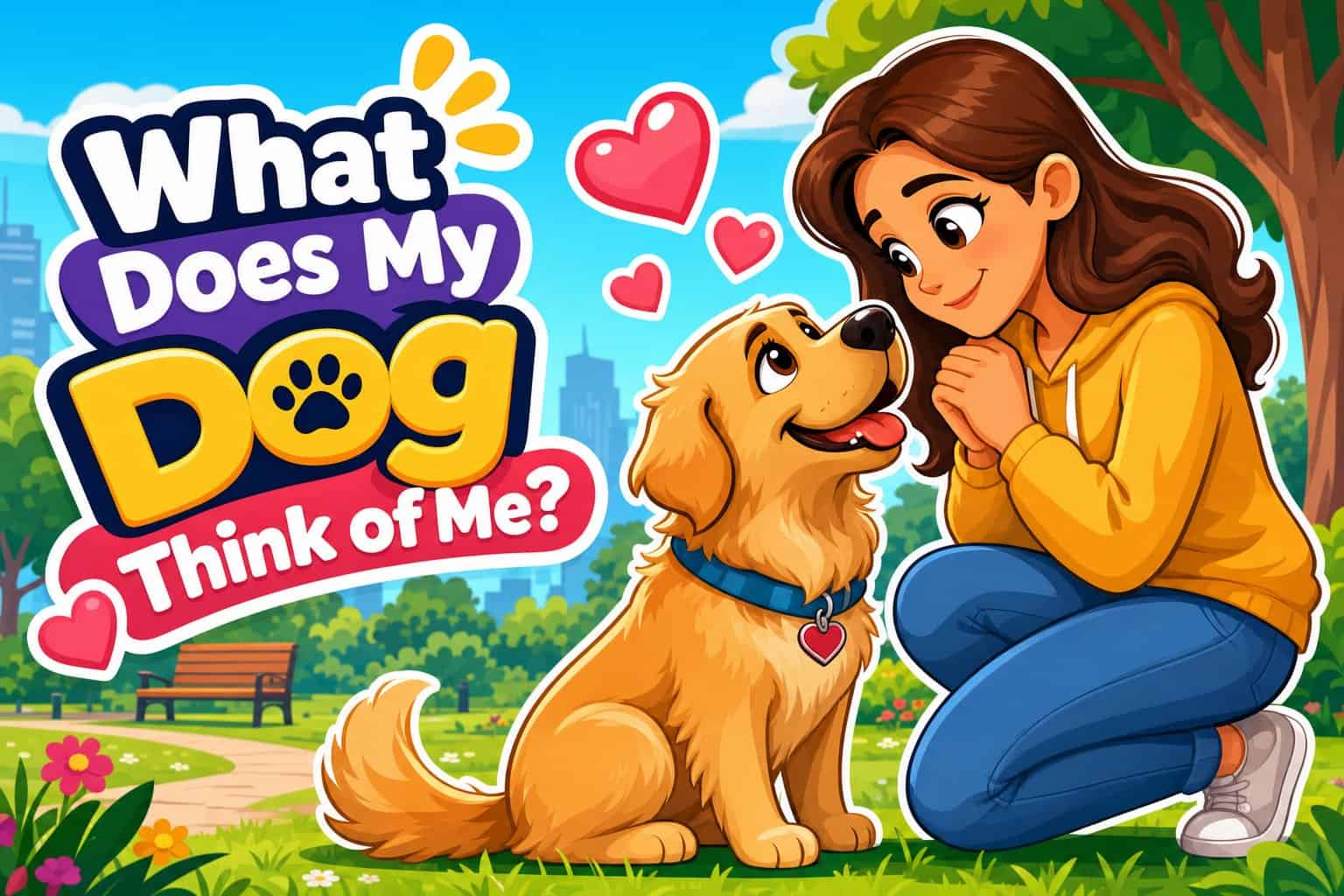
You look at your dog and wonder what goes on behind those eyes. Do they see you as a friend, a parent, or just the person who fills the food bowl?
Dogs may not use words, but they form clear opinions about the people in their lives. Your dog likely sees you as a safe base, a provider, and a key part of their daily world.
Many dogs show this through body language, close contact, and excitement when you come home. Experts note that dogs use signals like tail wags, eye contact, and vocal sounds to express how they feel about you, as explained in how dogs communicate with humans.
Small habits, tone of voice, and daily routines all influence the trust and connection you build together.
What Your Dog Actually Sees When They Look at You
Your dog does not see you the way another human would. Your dog reads your face, voice, movements, and daily habits to figure out who you are and what you mean to them.
Your Dog Reads Your Emotions Better Than You Think
Your dog watches your face closely. Research shows dogs can read human facial expressions and tone of voice, which helps them judge your mood.
This ability plays a big role in how dogs perceive human emotions. If you smile and speak in a calm voice, your dog often relaxes.
If you shout or move fast, your dog may tense up or back away. They connect your emotions to past outcomes, such as treats, walks, or scolding.
Dogs also rely on their senses. Their vision is more limited than yours.
They mainly see blue and yellow and have blurrier sight, as explained in this guide on how dogs see humans. Because of that, your tone and scent often matter more than small visual details.
What Your Dog Is Telling You Right Now
Your dog “talks” to you with their body. You can learn a lot by watching small signals.
Common signs include:
- Loose wagging tail: relaxed and friendly
- Tucked tail: fear or stress
- Soft eyes and relaxed ears: comfort
- Turning away or licking lips: anxiety
Dogs also look to you for cues. If a stranger approaches and you stay calm, your dog often stays calm too.
If you pull the leash tight, your dog may see the situation as tense. You shape how safe your dog feels.
Clear signals, steady routines, and calm reactions help your dog understand what to expect from you.
Why Your Dog Follows You Everywhere
Many dogs form strong attachments to their owners. Studies suggest dogs show patterns similar to young children.
They seek closeness, feel stress when you leave, and show excitement when you return. You can read more about this idea in discussions of whether dogs see humans as parents.
You may notice your dog follows you from room to room. That behavior often reflects trust, not neediness.
Your dog sees you as a provider of food, safety, and guidance. Over time, shared routines build this bond.
Feeding times, walks, play, and training sessions all teach your dog that you are a steady and reliable part of their world.
How to Strengthen Your Bond Every Day
You shape how your dog sees you through daily actions. Clear communication, consistent rewards, and attention to small signs of affection help your dog feel safe and connected to you.
How to Actually Communicate With Your Dog
Your dog watches your body more than your words. Posture, tone, and timing matter.
Use short, clear commands like “sit,” “stay,” and “come.” Say each cue once, then wait.
If you repeat it many times, your dog may learn to ignore it. Match your tone to the task.
A calm, steady voice helps your dog relax. A cheerful tone encourages play.
Dogs read emotion in human voices, which researchers explain in this article about how dogs interpret human emotions and form bonds. Spend time learning your dog’s body language.
Notice tail position, ear movement, and eye contact. Rover explains that learning your dog’s body language and spending time together strengthens your connection.
When you respond in ways your dog understands, you reduce confusion and build trust.
Rewards Build Trust, Punishment Breaks It
Reward the behavior you want to see again. That simple rule shapes how your dog thinks about you.
Use treats, praise, or play right after your dog follows a cue. The reward must come within seconds.
Clear timing helps your dog link the action to the outcome. Avoid harsh punishment.
It can create fear and weaken trust. Instead, redirect unwanted behavior and reward the correct choice.
Research shows that strong human-dog bonds support better behavior and longer well-being, as described in this guide on building a stronger dog and human relationship.
Stay consistent. If you allow jumping one day and correct it the next, you send mixed signals.
Clear rules help your dog feel secure, and security builds trust.
The Quiet Ways Your Dog Says ‚I Love You
Your dog shows affection in simple, steady ways. You just need to notice them.
Common signs include:
- Following you from room to room
- Leaning against your legs
- Making soft eye contact
- Bringing you toys
- Relaxing near you
Studies suggest that dog-human bonds share traits with close family relationships. You can read more in this overview of dog-human relationships and attachment research.
When your dog seeks your attention or rests beside you, that behavior signals comfort. Respond with calm touch, gentle words, or shared play.