
12 Ways To Make Your Home Arthritis-Friendly For Senior Dogs

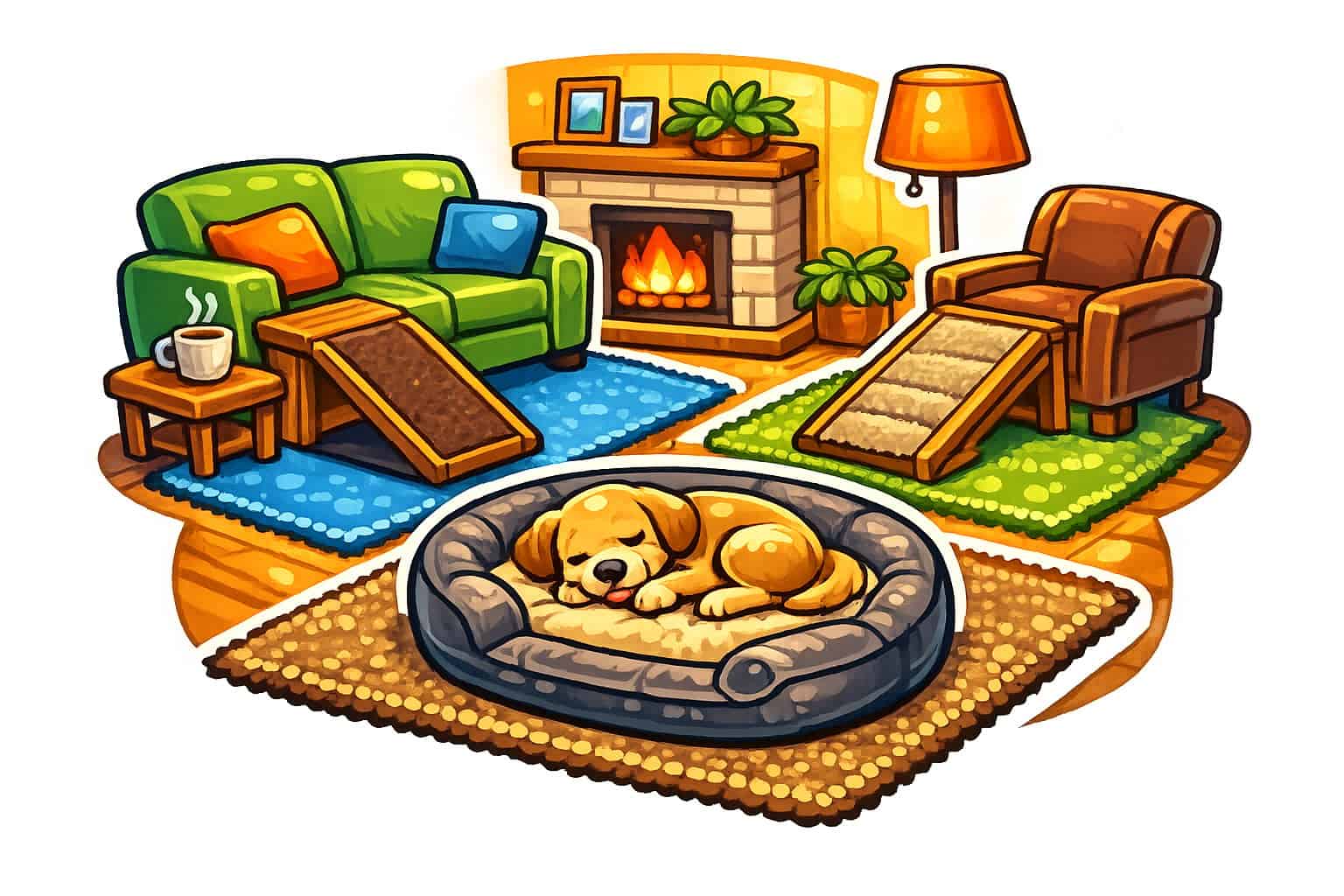
Watching your senior dog struggle with stiff joints and slow movements can be hard. Arthritis affects many older dogs, causing pain and making it harder for them to move around the home they know so well. The good news is that you don’t need major renovations or expensive equipment to help your furry friend feel better.
Small changes to your home can make a big difference in your arthritic dog’s daily comfort and mobility. From safer flooring to better sleeping spots, simple adjustments can help reduce pain and prevent injuries. These home modifications work alongside your vet’s treatment plan to give your senior dog the support they need to stay comfortable and active for longer.
1) Install non-slip rugs or mats to prevent slipping on hardwood or tile floors
Senior dogs with arthritis often struggle with balance and joint stability. Slippery floors make it harder for them to walk safely around your home.
Non-slip rugs and mats give your dog better traction on smooth surfaces like hardwood and tile. These surfaces are especially dangerous for dogs with weak or painful joints. A simple slip can cause injury or make your dog afraid to move around.
You can buy rugs that already have non-slip backing built in. If you have rugs you like, you can add a rug pad underneath or use special tape to keep them in place. Look for pads made for your specific floor type since some work better on hardwood while others are designed for tile.
Place non-slip mats in areas your dog uses most. Good spots include in front of food bowls, near doorways, and along hallways. You should also put them anywhere your dog needs to turn or change direction.
Make sure the rugs lay completely flat without curled edges. Raised edges can become tripping hazards for dogs with mobility issues.
2) Use ramps or pet stairs to help your dog access furniture and cars easily
Jumping up and down from furniture or cars puts a lot of stress on your dog’s joints. For dogs with arthritis, this repeated strain can cause pain and make their condition worse.
Pet ramps and stairs give your dog a gentler way to reach beds, couches, and vehicles. Instead of jumping, they can walk up slowly at their own pace. This reduces pressure on their hips, knees, and back.
You can find ramps and stairs in different sizes to fit your home. Some are lightweight and fold up for easy storage. Others are sturdier for larger dogs or higher surfaces.
When picking between ramps and stairs, think about what works best for your dog. Ramps have a gradual slope that’s easier for some dogs. Stairs take up less space and work well in smaller rooms.
Make sure whatever you choose can support your dog’s weight safely. Look for non-slip surfaces so your dog won’t slide while using them.
3) Provide an orthopedic memory foam dog bed for joint support
Your senior dog with arthritis needs a bed that supports their aching joints. Regular dog beds don’t provide enough cushioning for dogs dealing with joint pain.
Orthopedic memory foam beds are made to support your dog’s body weight evenly. The foam molds to your dog’s shape and takes pressure off painful joints. This helps your dog rest more comfortably and sleep better at night.
Look for beds with thick memory foam that won’t flatten over time. A good orthopedic bed should be at least three inches thick for proper support. Dogs with hip problems or arthritis will feel the difference right away.
Choose a bed with a washable cover to keep things clean. Your dog will spend a lot of time on this bed, so it needs to stay fresh. Make sure the bed is large enough for your dog to stretch out fully.
Place the orthopedic bed in your dog’s favorite resting spot. You might want more than one bed if your dog likes to nap in different rooms. This gives your dog a supportive place to rest wherever they are.
4) Elevate food and water bowls to reduce strain on your dog’s neck and hips
When your senior dog has arthritis, reaching down to floor-level bowls can cause unnecessary pain and discomfort. Raised feeders bring food and water closer to your dog’s mouth, which means less bending and stretching during mealtime.
Your dog naturally shifts more weight onto their front legs when eating from the ground. This puts extra pressure on joints that may already be sore from arthritis. An elevated bowl helps your dog maintain a more comfortable posture while eating and drinking.
The benefits are especially noticeable if your dog has arthritis in their neck, shoulders, elbows, or hips. You’ll want to choose a height that allows your dog to eat without straining upward or bending down too far.
Look for stable raised feeders that won’t tip over easily. Many options include stainless steel bowls that are easy to clean. You can find elevated bowls in different heights to match your dog’s size and needs.
Make sure the bowls are at a comfortable level for your specific dog. The right height lets them eat in a natural position without stress on their joints.
5) Add baby gates to restrict access to stairs or slippery areas
Baby gates aren’t just for babies. They work great for senior dogs with arthritis too.
Your older dog might struggle with stairs due to joint pain and stiffness. A fall could cause serious injury. Installing gates at the top and bottom of staircases keeps your dog safe by blocking access completely.
Look for gates that swing open rather than requiring you to step over them. This makes it easier for you to pass through while still protecting your dog. Hardware-mounted gates offer the most stability and won’t shift or fall over if your dog leans against them.
You can also use gates to block off rooms with slippery tile or hardwood floors. These surfaces are hard for arthritic dogs to navigate safely. By restricting access to carpeted areas only, you reduce the risk of slips and falls.
Choose gates that are tall enough so your dog won’t try to jump over them. Make sure the gate latches securely every time you close it. Some gates have auto-close features that help ensure they’re always shut properly.
6) Use heated pet mats to soothe stiff joints and muscles
Heated pet mats provide gentle warmth that can help your senior dog feel more comfortable. The heat relaxes tight muscles and improves blood flow to sore joints. This can reduce stiffness and make it easier for your dog to move around.
You can choose between electric heating pads or microwaveable options made specifically for pets. Make sure the mat has temperature controls so it doesn’t get too hot. Always place a thin blanket or cover between your dog and the heating pad to prevent burns.
Heated mats work especially well during cold weather when arthritis pain tends to get worse. Your dog might enjoy lying on the warm surface after walks or during rest periods throughout the day.
Watch your dog while they use the heating pad, especially at first. Check their skin regularly to make sure there’s no redness or irritation. Never leave your dog unattended on a heating pad for long periods.
Talk to your vet before starting heat therapy. They can tell you how long and how often to use heated mats based on your dog’s specific needs.
7) Apply joint-friendly flooring options like cork or rubber tiles
Hard floors like tile or hardwood can be tough on your senior dog’s aching joints. Every step puts pressure on their hips, knees, and paws.
Cork flooring offers natural cushioning that absorbs shock when your dog walks or stands. It’s soft enough to reduce joint stress but firm enough to provide stability. Cork is also naturally slip-resistant, which helps prevent falls.
Rubber tiles are another excellent choice for dogs with arthritis. They provide good traction and cushion your dog’s joints with each step. You can install rubber tiles in high-traffic areas where your dog spends most of their time.
Both materials are easy to clean and maintain. They resist moisture better than carpet, which matters if your senior dog has occasional accidents.
You don’t need to replace all your flooring. Focus on the rooms where your dog walks most often, like the kitchen, living room, or hallways. Even covering small areas with rubber mats or cork tiles can make a real difference in your dog’s comfort and mobility.
8) Keep pathways clear to ensure easy navigation around the house
Your senior dog with arthritis needs clear, open spaces to move around safely. Remove toys, shoes, and other items from the floor that could block their path or cause them to trip.
Arrange your furniture to create wide walkways throughout your home. Your dog should be able to walk from room to room without squeezing through tight spaces or making sharp turns that stress their joints.
Pay special attention to hallways and doorways. These areas should have enough room for your dog to pass through comfortably without bumping into walls or furniture.
Store items like bags, boxes, and cords out of the way. Even small objects on the floor can become obstacles for a dog dealing with joint pain and reduced mobility.
Check your floors regularly for clutter that might have accumulated. Make it a habit to do a quick sweep of each room to pick up anything that could get in your dog’s way. This simple practice helps prevent accidents and makes daily movement easier for your arthritic companion.
9) Arrange frequent soft resting spots in common areas for quick breaks
Senior dogs with arthritis need to rest more often than younger dogs. Their joints get tired and sore when they move around the house. Setting up multiple soft beds in the rooms where you spend the most time helps your dog take breaks whenever needed.
Place cushioned resting spots in your living room, kitchen, and home office. Your dog can lie down for a few minutes without walking far to their main bed. This reduces strain on their painful joints.
Choose orthopedic foam beds or thick cushions that support achy joints. Make sure each spot is easy to get on and off without climbing or jumping.
You can use washable blankets, pet beds, or even folded towels. The key is having enough options so your dog always has a comfortable place nearby. When rest is easily available, your dog won’t push through discomfort trying to stay close to you.
These quick rest breaks throughout the day help prevent your dog’s joints from becoming overly stiff and painful. Your dog will feel more comfortable moving around knowing relief is just steps away.
10) Incorporate gentle massage sessions to relieve muscle tension
Your senior dog with arthritis carries tension in their muscles from compensating for joint pain. Regular massage sessions can help ease this discomfort and improve their quality of life.
Start with light pressure using your fingertips in small circular motions. Focus on the muscles around affected joints, like the shoulders, hips, and lower back. Your dog will let you know what feels good by relaxing into your touch.
Keep sessions short at first, around 5 to 10 minutes. You can gradually increase the time as your dog becomes more comfortable. The best time for massage is when your dog is already calm and resting.
Pay attention to your dog’s signals during the massage. If they pull away or seem uncomfortable, reduce pressure or move to a different area. Some dogs prefer gentle strokes while others enjoy slightly firmer pressure on their muscles.
Massage improves blood flow to stiff muscles and helps release built-up tension. It also gives you a chance to check for any new lumps, bumps, or sore spots. This hands-on time strengthens your bond while providing real physical benefits for your arthritic companion.
11) Maintain a consistent temperature to avoid cold-triggered stiffness
Cold weather can make your senior dog’s arthritis pain worse. When temperatures drop, their joints become stiffer and more uncomfortable. Keeping your home at a steady, warm temperature helps prevent this problem.
Set your thermostat to a comfortable level and try to keep it there throughout the day and night. Your dog’s joints need consistent warmth to stay loose and mobile.
Pay attention to drafty areas in your home. Cold air coming through windows or doors can create chilly spots where your dog might rest. Use weather stripping or draft stoppers to block these cold air leaks.
Place your dog’s bed away from windows and exterior walls. These areas tend to be colder, especially during winter months.
A room thermometer can help you monitor the temperature in different areas of your home. This way, you can make sure your dog’s favorite spots stay warm enough.
If you need to adjust the temperature at night, do it gradually. Sudden temperature changes can trigger joint stiffness in dogs with arthritis. Your goal is to create a stable, warm environment where your senior dog can move comfortably.
12) Place supportive pillows in favorite resting spots for extra comfort
Your senior dog with arthritis needs cushioned support where they rest most often. Regular floors and hard surfaces can make joint pain worse.
Start by watching where your dog likes to spend time. Maybe they have a sunny spot by the window or a corner in the living room they prefer. Put supportive pillows or orthopedic dog beds in these areas.
Look for pillows with good thickness that won’t flatten quickly. Memory foam works well because it shapes to your dog’s body and supports their joints. The pillow should be thick enough to keep them off hard floors.
You can also use extra pillows to support specific problem areas. Place a smaller pillow under their head or between their legs when they lie down. This helps take pressure off painful joints.
Make sure the pillows have removable, washable covers. Your dog will appreciate clean, fresh-smelling places to rest. Keep a few backup pillows ready so you always have clean ones available while others are in the wash.
What is Arthritis in Senior Dogs?
Arthritis affects nearly one in five dogs as they age, causing joint pain and stiffness that can make everyday activities challenging. Your home setup plays a big role in how well your senior dog manages this condition.
Common Symptoms of Canine Arthritis
You might notice your dog limping or favoring certain legs when they walk. Stiffness often appears after rest periods, especially in the morning or after naps.
Your dog may struggle to climb stairs, jump onto furniture, or get into the car. Some dogs drag their back legs or move more slowly than usual. You might also see behavioral changes like decreased interest in playing, reluctance to go on walks, or irritability when touched in certain areas.
Watch for signs of pain like whimpering, excessive licking of joints, or avoiding activities they once enjoyed. Many dogs with arthritis have difficulty standing up from a lying position. The symptoms often worsen in cold or damp weather.
Impact of Home Environment on Joint Health
Hard floors like tile, hardwood, and laminate make walking painful for arthritic dogs. These surfaces offer no cushioning and can cause your dog to slip, which puts extra stress on already sore joints.
Stairs force your dog to bend their joints at difficult angles with each step. High-sided food bowls and water dishes require uncomfortable neck bending. Furniture that’s too high means your dog must jump to reach their favorite spots, which can worsen joint damage over time.
Poor lighting can make your dog hesitant to move around, reducing their activity level and leading to muscle loss. Cold drafts near sleeping areas can increase joint stiffness. Even the location of food, water, and bathroom access affects how much your dog has to move throughout the day.
Long-Term Benefits of an Arthritis-Friendly Home
Making your home safer for your senior dog with arthritis creates lasting improvements in their comfort and safety. These changes help your dog move around more easily and reduce the chance of painful injuries.
Enhancing Quality of Life
Your dog will experience less daily pain when their home supports their limited mobility. Simple changes like adding rugs on slippery floors let them walk with confidence instead of fear. They’ll spend more time playing and engaging with your family rather than lying down to avoid discomfort.
Dogs with arthritis-friendly homes often show improved moods and energy levels. When your dog can reach their food bowl, water, and bed without struggling, they maintain their independence longer. This independence keeps them mentally sharp and emotionally happy.
You’ll notice your dog sleeping better in an adapted home. Soft bedding that supports their joints means deeper, more restful sleep. Better sleep leads to less inflammation and stiffness in their joints. Your dog will wake up more refreshed and ready to enjoy their day.
The stress reduction from easier movement affects their whole body. Lower stress means a stronger immune system and better overall health. Your senior dog may even live longer when chronic pain doesn’t wear down their body systems.
Reducing Injury Risks
Falls and slips cause serious problems for dogs with arthritis. Hard floors become dangerous when your dog’s legs can’t support them properly. Adding non-slip surfaces throughout your home prevents these accidents before they happen.
A single fall can break bones or tear ligaments in an arthritic dog. These injuries take longer to heal in senior dogs and may never fully recover. Prevention through home modifications saves your dog from this unnecessary suffering.
Ramps and steps reduce strain on joints that already hurt. Your dog won’t need to jump onto furniture or climb stairs that could cause them to stumble. These modifications protect their hips, knees, and spine from further damage.
You’ll save money on emergency vet visits when your home prevents injuries. Treatment for falls can cost thousands of dollars and require surgery. The small investment in home modifications pays off by avoiding these expensive medical bills.