My Old Dog Only Wants to Lie Outside

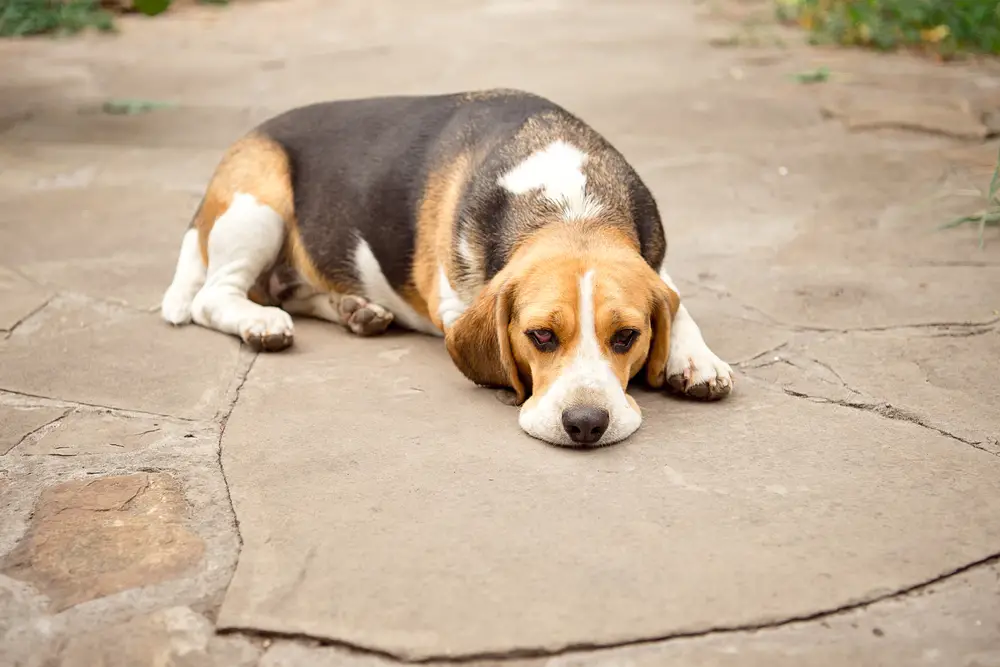
„He’s never done that before!“ Dog owners say that even when their best friend has been by their side for years. Our four-legged pals always seem to come up with new ideas.
Recently, they pulled every pillow out of their bed. Yesterday, they neatly ate around the potatoes in their bowl. Today, suddenly they want to sleep outside.
Do you have one of those characters too, and your old dog only wants to lie outside now? Then you’re in the right place. Why this happens especially with senior dogs and how you can recognize age-related weakness in your four-legged friend — that’s what today’s article is about.
Old dog always lies outside – Is that normal?
Dogs can get a bit quirky as they age. That’s normal. Their needs change, and with that, certain traits can shift too.
But an old dog wanting to lie or sleep only outside is not the norm.
As pack animals, dogs usually care about being with their canine companions and their people. Many dogs want to sleep near their humans at night as well.
Plenty love to snuggle up with them in bed or on the couch. So your dog seeking distance is rather unusual.
Why senior dogs prefer to sleep outside
If your old dog suddenly wants to sleep outside, there can be many reasons. Most often it’s due to
- pain, or
- something inside the house disturbing their sleep.
Additionally, your dog may have a weak bladder as they age.
If you’ve gone along with the behavior for a few weeks, it becomes a habit.
Older dogs can learn new routines too. In some cases, it’s especially hard for them to let go of a new habit. That’s particularly true if the idea originated with them — as is often the case with sleeping outside.
Pain
If your senior suffers from arthritis, it may be hard for them to settle into their dog bed. So keep an eye on your dog when they want to sleep outside.
- Where do they lie down?
- Do they seek sheltered spots, or do they lie right in the middle of the lawn?
- Are they very restless and changing places frequently?
That can be a sign of pain, as a study found (English source).
With some conditions, cold eases pain. Your dog may be using the cool air to soothe their discomfort.
Disturbed sleep
Noise, playing children, other animals, and the gurgling heater can rob your dog of sleep indoors. So they’d rather lie outside, even if it means giving up their cozy bed.
Can’t your dog sleep at night? We wrote a blog post about that. Check it out here: >> Dog doesn’t sleep at night: Causes and solutions
Should you let your dog sleep outside?
That depends on many factors.
- How cold does it get at night?
- Will you notice if your dog wants to come back in during the night?
- Does your dog have a wind- and rain-sheltered spot in the yard?
- Is your yard securely fenced so your dog can’t run off?
- Does your dog eat everything off the ground when unsupervised?
Your dog shouldn’t freeze or overheat when sleeping outside. Unless they’re a Husky, you shouldn’t let them sleep outside in the dead of winter.
A doghouse that keeps your dog dry and out of the wind is a good middle ground. There’s space for warm blankets.
Your dog can still stick their nose outside whenever they want. This video shows how to build a doghouse yourself.
Beyond that, you have to consider safety. If something scares them and they bolt, an old dog can quickly lose their bearings in the dark and in a panic.
So your yard needs a tall fence your dog can’t get over anywhere. It’s just as important whether your yard is accessible from the street, for example with a corner lot.
I’m just saying: poison or razor blades.
People who aren’t quite right in the head don’t only place such deadly bait on popular walking routes. Some simply toss it onto properties where dogs live.
If your dog is alone in the yard at night, they have all the time in the world to get into it.
Why do old dogs withdraw?
This is also tied to increased need for rest with age. Your dog realizes they can’t do what they used to. They get tired faster, some movements hurt, or aren’t even possible anymore.
They get startled all the time because they no longer hear someone walking by. Thanks to cataracts, their vision is worse too.
All of that makes your senior less inclined to leave their safe home. They’ll accept being alone to have that comfort.
Age-related weakness
Signs of aging can show up early in dogs.
You might notice the first gray hairs around the eyes or muzzle shortly after their fourth birthday. That doesn’t mean your dog will pass away early.
Some people go gray in their early 30s too. That’s just genetics.
You can recognize age-related weakness in dogs by
- hearing loss,
- vision loss,
- bladder weakness,
- joint problems and the resulting reluctance to move,
- susceptibility to infections,
- loss of appetite and weight loss,
- muscle wasting, and
- a dull coat.
How does a dog behave shortly before death?
Not many dogs are fortunate enough to die naturally. Most of the time, their owners have to make the decision for them because they’re incurably ill and suffering.
A natural death isn’t always a peaceful process either. Ideally, you have a veterinarian you can call who can intervene.
Most of the time, a natural death in dogs occurs in three phases.
Phase 1: Refusing food
Most dogs leave food and water untouched for several days before they die. That’s likely because their organs are slowly shutting down.
The food wouldn’t be digested anymore. Another assumption is that dogs sense the end is near. They stop eating because they won’t be using that energy.
Phase 2: Urge to move
If your old dog refuses food for at least three days and then starts pacing the house nonstop, those are pretty clear signs.
Restlessness despite refusing food often indicates death is near.
That’s how your dog uses up their last energy. But again, it may also be that your dog senses something and gets nervous. The pacing is like searching for a solution.
This phase usually doesn’t last more than a day or two.
Phase 3: Coma, seizures, and muscle relaxation
After the increased restlessness comes the final phase. Your dog’s organs are barely functioning, so they slowly slip into a coma.
Seizures usually occur at this point. During them, your dog may vomit or lose bowel control. The latter often happens during euthanasia at the vet as well.
6 reasons why your dog no longer wants to come into the house
I know one of these characters too. The female dog uses every chance to squeeze through the open door into the yard.
But when it’s time to go back inside, she acts like she doesn’t know how to walk. She’s still young and her owners know about the issue. They don’t know what’s causing it though.
If your old dog doesn’t want to come back inside, it may be due to
- pain,
- the flooring in your house,
- the temperature,
- the noise level,
- a weak bladder, or
- dementia.
1) Pain
With advanced arthritis, even the threshold can become a serious obstacle. Your dog may avoid that big step out of fear of pain.
They’ll accept having to stay outside because of it.
Back pain also limits mobility. Your dog may no longer be able to come inside without pain.
2) Flooring
Does your dog step onto tile as soon as they enter the house? That could be the reason for their refusal.
Tile is slippery. Older dogs often lose some control over their limbs. The hind end can simply give out. On slippery tile, they lose traction even faster.
Your dog wants to avoid that feeling. So they’d rather stay outside than walk across tile.
3) Temperature
Older dogs get cold more quickly than young ones. Is it perhaps warmer outside than in your house? Then your dog may want to take advantage of that warmth to maintain their body temperature.
The reverse can also happen — it may be too warm inside, so they want to cool off outside. That’s less likely, though. Older dogs are more prone to feeling cold.
Did you know? >> What’s the ideal room temperature for dogs? Simply explained!
4) Noise level
Seniors need more peace and quiet. Playing children nearby disturb them. Running household appliances can keep them from sleeping too.
Outside, a few birds chirp and a car drives by now and then. Older dogs tolerate that better than constant noise.
5) Weak bladder
As with many people, older dogs need to use the bathroom more often. As long as it’s not incontinence, they’re aware of it.
Because they know they’re not allowed to pee inside, they prefer to stay outside. They don’t dare come in because they can’t judge whether they’ll make it to the next walk.
6) Dementia
Dementia changes many familiar behaviors. Your dog may be great today and respond to cues, then tomorrow it seems like they’ve forgotten everything again.
You can recognize dementia by
- a changed sleep rhythm,
- disorientation (your dog can’t find their food),
- restlessness (your dog paces through the home all day),
- forgetfulness, and
- house soiling.
What to do if your dog no longer wants to come inside?
With small dogs, there’s a quick fix.
You just tuck the little one under your arm. But what if 77 pounds are sitting on the doormat and refusing to move?
Try to figure out the reason for the behavior. If it’s the tile, lay down a rug. If it’s too noisy for your dog, make things quieter. If in doubt, see your vet and have your dog checked for joint issues and back pain.
If none of that works, your dog needs a recall cue they reliably respond to. For most owners, that’s „Come.“
A positive tone and friendly body language are important so your dog wants to come to you. Once they start moving your way, have treats ready so your dog immediately associates coming with a reward.
Sometimes you have to nudge older dogs a bit for their own good. So let your dog go outside only on a leash. You don’t have to hold it the whole time.
Your dog can drag it behind them. Choose a short one. You only need it to bring your dog inside if they refuse.
Call your dog. If they don’t budge, take the leash in your hand, go back inside, and call again. If your dog still doesn’t respond, apply a little pressure to the leash.
You shouldn’t drag your dog inside, but they should realize you mean it.
Ideally, attach the leash to a harness instead of a collar. If your dog starts moving toward you, praise them, even if you had to help a bit.
My old dog only wants to lie outside – The takeaway
Old people and old dogs are pretty similar. They all can be stubborn and sometimes display quirky behaviors.
If the weather is pleasant and your dog isn’t sick, it’s fine for them to sleep outside even in old age. But it’s safer if they stay inside at night.
For my own peace of mind, I probably wouldn’t let my senior sleep outside.
As long as you’re comfortable with it, your yard is securely fenced, and your dog has a place to retreat, there’s nothing standing in the way.
Frequently Asked Questions
Warum will mein alter Hund nachts immer raus?
Meist liegt es an einer schwachen Blase, dass dein Hund nachts vermehrt raus möchte.
Warum schläft mein Hund plötzlich lieber draußen?
Hat sich in deinem Haus nichts geändert, haben sich vermutlich die Bedürfnisse deines Hundes geändert. Eventuell braucht er mehr Ruhe, er leidet an Schmerzen oder ihn stört die Temperatur im Haus.
Woran erkenne ich Altersschwäche beim Hund?
Alte Hunde bekommen graues Fell, hören nicht mehr so gut und leiden möglicherweise an grauem Star.