Natural Death or Euthanasia? Weighing the Options

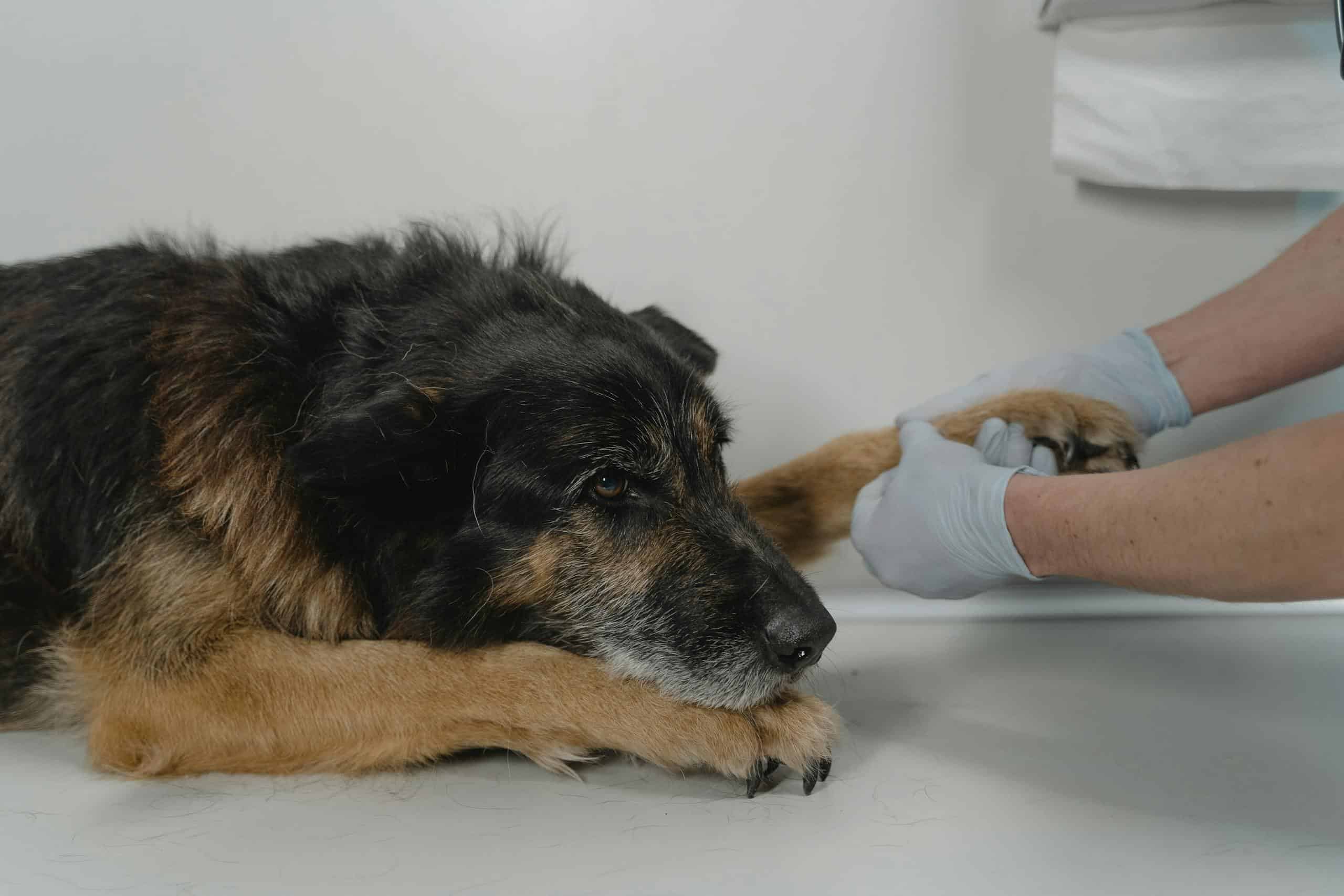
At some point every dog owner has to face the question of how their four-legged friend will leave this world. These days, most dogs die in a controlled setting at the vet through euthanasia. But there is also the option of letting nature take its course.
This article compares both options, euthanasia and natural death, and outlines their pros and cons. You will see that it is not simply black and white.
Which path you and your dog ultimately take is your personal decision.
Natural death and euthanasia: two quick definitions
Natural death
We refer to natural death as the dying process that naturally begins at the end of life. In dogs it is divided into three phases. Death is inevitable at the end of the third phase.
A natural death does not occur simply due to old age. There is always a pathological process responsible. Because of age, the underlying health causes may no longer be treatable or only poorly treatable. At some point this leads to a slow organ failure.
If one organ stops working, the others slowly follow. The body gradually shuts down its functions.
That is only one possibility though. A natural death can also be a heart attack during sleep. For many owners that is understandably shocking, yet also calming at the same time. Dogs simply falling asleep and not waking up again is rather rare.
Euthanasia
Euthanasia means medical intervention in the natural dying process. The dog receives a medication that stops the heart and breathing. Death occurs within seconds. Anesthesia is administered first.
This is stipulated by Section 4 of the Animal Welfare Act: vertebrates may only be killed with pain eliminated.
Occasionally, the term “euthanasia” is also used for discontinued treatments when this will definitely result in death. Supportive measures, such as pain relief during the dying process, are also sometimes called euthanasia.
In veterinary medicine, however, we primarily mean causing death using medications intended for this purpose.
How natural is “natural death,” really?
We call it “natural death.” If we look at nature though, this way of dying does not have much in common with what happens in the wild. Hardly any wild animal lives long enough to experience multiple organ failure at the end of life. In that condition it would also have to remain undetected until it died.
The usual course of things would be an earlier death due to predators, injuries, diseases, or hunger. If an animal actually lives long enough for the dying process to begin due to age, it would be unprotected by then at the latest.
Predators would very likely find it.
So you could say that the natural death of our pets is a delayed version of the real, natural death. It occurs later and likely lasts much longer.
Natural death or euthanasia? The comparison
In the following sections I address areas that distinguish natural death from euthanasia. Which option comes out ahead is sometimes a subjective decision. What is an advantage for one dog owner can be a disadvantage for another.
So read through the points carefully. Then consider which option fits you, your dog, and your situation better.
Comparison #1: Duration
Euthanasia and natural death take different lengths of time. Euthanasia is much shorter. After anesthesia is administered, it takes a few minutes for the dog to be in a deep sleep. The vet then injects the medication for euthanasia. Once this injection is given, the dog dies within seconds. The heart stops beating, breathing ceases. He is dead.
Even so, the vet will let a few more minutes pass. This allows time to say goodbye. Ideally you are present for the euthanasia. You can hold your dog in your arms, or you can ask your vet to come to your home.
This time also ensures that the euthanasia proceeded correctly.
After these minutes the vet will listen to your dog’s heart and may check reflexes. If everything has gone as it should, which it does in the vast majority of cases, it is done.
Natural death is much slower. It is divided into three phases. Each of these phases can last several days.
At any time, however, your dog may also develop a serious health problem. That could be a heart attack or a stroke, for example. This can significantly speed up the natural dying process, but it cannot be predicted ahead of time.
Comparison #2: Painfulness
Dying involves pain. These pains arise as the body’s functions slowly shut down. If the kidneys and liver no longer work properly, the body poisons itself. That alone can cause pain. The waste products can also lead to cramps. Those are painful, too.
In addition, animals may suffer small strokes during natural death. These strokes are not fatal, but they disrupt signal transmission in the brain. This can lead to diffuse pain.
On top of that, dogs do not take in food during the natural dying process. Pain medications would have to be given under restraint. Depending on pre-existing conditions, that can make dying more painful as well.
Euthanasia is intended to be pain-free from the moment anesthesia is given. Your dog receives an anesthetic, just as if he were being prepared for surgery. He falls asleep and no longer feels any pain in that state. The vet administers the euthanasia drug through the same IV line used for the anesthesia.
Natural death therefore has a clearly higher potential for pain than euthanasia. With euthanasia, the only pain is from placing the IV for anesthesia.
It is also possible to accompany natural death with strong pain medications. Your dog would then be pain-free or at least have significantly less pain. The medications would not otherwise alter the course of the process.
Comparison #3: Costs
Euthanasia costs money. The exact price consists of various items that are needed. The euthanasia itself, meaning the injection of the medication that causes death, costs at least 30 €. If your vet charges a higher rate, that cost can go up to 90 €.
Single-use supplies, the medications, and the prior anesthesia are added to that. Your vet may also charge you for a general exam. This is necessary because a vet is not allowed to put a dog to sleep just like that. First, they must determine that the animal is in very poor condition, is suffering, and that there are no promising treatment options.
As a result, euthanasia for a dog costs between 100 and 400 € in total.
Natural death is free. Nature takes its course and that does not cost money. If you want to support your dog with additional pain medication, costs will arise. These are significantly lower than with euthanasia.
Comparison #4: Psychological burden
The death of a beloved pet is always an enormous psychological burden. Which option is gentler can only be decided on a case-by-case basis. Some dog owners do not want to interfere with natural processes and “play God.” Others would rather end the process as quickly as possible and get through it.
That is why I am listing what exactly can cause these burdens. What questions do dog owners ask themselves when they have to decide whether to put their dog to sleep or let them die naturally?
“Was there still any hope?”
The most common question after euthanasia is whether you really did the right thing. Might there have been a treatment option to save your dog’s life after all?
I cannot give you a 100 percent certain answer. However, euthanasia is always a difficult decision for a vet. They will never recommend it lightly. In fact, the topic of euthanasia weighs heavily on veterinarians. One in eleven suffers mental health issues as a result, as you can read in an info sheet by Karolina Kantor.
Ideally, your vet has known your dog for a long time and knows their medical history. That way they know right away what else could be tried, but can also advise against uncertain attempts at treatment.
“Did I act in my dog’s best interest?”
Whether it involves euthanasia or a natural death, this question likely comes up either way. Once the step has been taken, you have time for such thoughts. You ask yourself whether you really had your dog’s well-being in mind. You might also blame yourself for not wanting to let him go. Conversely, you might feel you had him put to sleep too early simply because you could not bear to watch him suffer.
In my view your feelings and needs in this process are just as valid as your dog’s. And of course they should be heard and considered.
If the situation weighs on you that much, it is justified to euthanize a seriously ill dog. That applies even if the natural dying process has not yet begun and he might have lived for several more weeks. You never really know that in advance anyway. It is just as okay if you cling to your dog even though you know he will be leaving soon.
It is best not to be alone in a situation like this. Other people who are not as closely attached to your dog may be able to help you make a decision.
Comparison #5: Possible problems
Both options come with problems you should consider.
Natural death cannot be planned. Because it can stretch over many days, it may hit you at a very inconvenient time. A dying pet should not be left alone. If respiratory distress occurs, there is a risk of suffocation while fully conscious. That would be cruel and should be prevented by timely euthanasia.
Dying dogs sometimes undergo changes in behavior. Sudden aggression is also possible. The dog still needs care though.
The psychological burden can also become a physical one. You have to make sure your dog is lying on clean blankets or towels because he will soil himself. Some dogs suddenly scream loudly during the dying process, and for a long time. Sleep deprivation makes the caregiving work harder the next day.
There may even be disputes with neighbors or the veterinary authorities. You could be accused of animal cruelty. Even if the accusations are not substantiated, that can permanently damage relationships with neighbors.
Problems can also arise during euthanasia. Some dogs are extremely afraid of the vet. Even so close to death, they would summon all their strength to flee the clinic. Having to pull your dog back feels terrible.
Some vets also refuse euthanasia and want to use further diagnostic measures instead. This can lead to conflicts between you as the owner and the vet.
Something can also go wrong during euthanasia itself. If the vet gives too low a dose of the medication, death is delayed. That is distressing.
I had to witness such a euthanasia once. The animal was technically dead, since it had no heartbeat. But the breathing reflex continued for a few more minutes. That was really unpleasant for everyone involved.
Comparison #6: What comes after
Once your dog has set out on his final journey, another difficult task awaits you. You have to decide what should happen with his body.
If euthanasia is performed, you may already be at your vet’s office. They will offer to store the body and hand it over to a pet funeral service. If your dog dies at home without a vet present, you will need to take care of this yourself.
Either you bring his body to your vet and leave everything else to them, or you contact pet funeral services in your area yourself.
Your dog will then be cremated and either buried in a pet cemetery or you will receive an urn. You may place this urn in your home.
Alternatively, you can bury your dog directly in your yard. This is not allowed in every German state without further conditions. Among other things, the size of the dog plays a role.
This video summarizes the topic again for you.
Overview
So you do not lose track of all the differences, I have listed again what characterizes natural death and euthanasia.
| Natural death | Euthanasia |
|---|---|
| can take up to a week | takes only a few minutes |
| can be very painful | is pain-free |
| is free of charge | costs between 100 and 400 € |
| may be psychologically stressful for you | may be psychologically stressful for you |
| may involve sudden respiratory distress or loud screaming by the dog | can be delayed if the injection is incorrect |
Conclusion
Phew, that was a heavy topic. But it is good to think about it. It is best to get informed before you urgently have to make a decision. That way you can approach the task with a bit of distance.
I do not want to recommend one option to you 100 percent. A natural death can proceed very peacefully. Your dog may also make the decision for you by having a heart attack.
For my animals, I would probably always choose euthanasia at an appropriate time. I determine that together with my vet. For me, the severe pain that usually comes with a natural death weighs the most.
That is just my opinion though. You may see this completely differently.
Frequently asked questions
When is the right time to euthanize a dog?
This is an individual decision. At the latest, if your dog refuses food and water and only lies around apathetically, you should take this step.
Can you decide yourself whether a dog is euthanized?
Without your consent the vet may not euthanize your dog. If you refuse, however, the vet can inform the veterinary authorities, which will review your dogu2019s condition.
Can a vet refuse to euthanize a dog?
Yes, a vet is not obligated to euthanize a dog if, in their professional opinion, this step is not necessary. You are of course free to go to another vet.