
Why Is My Dog Scared of Thunder?

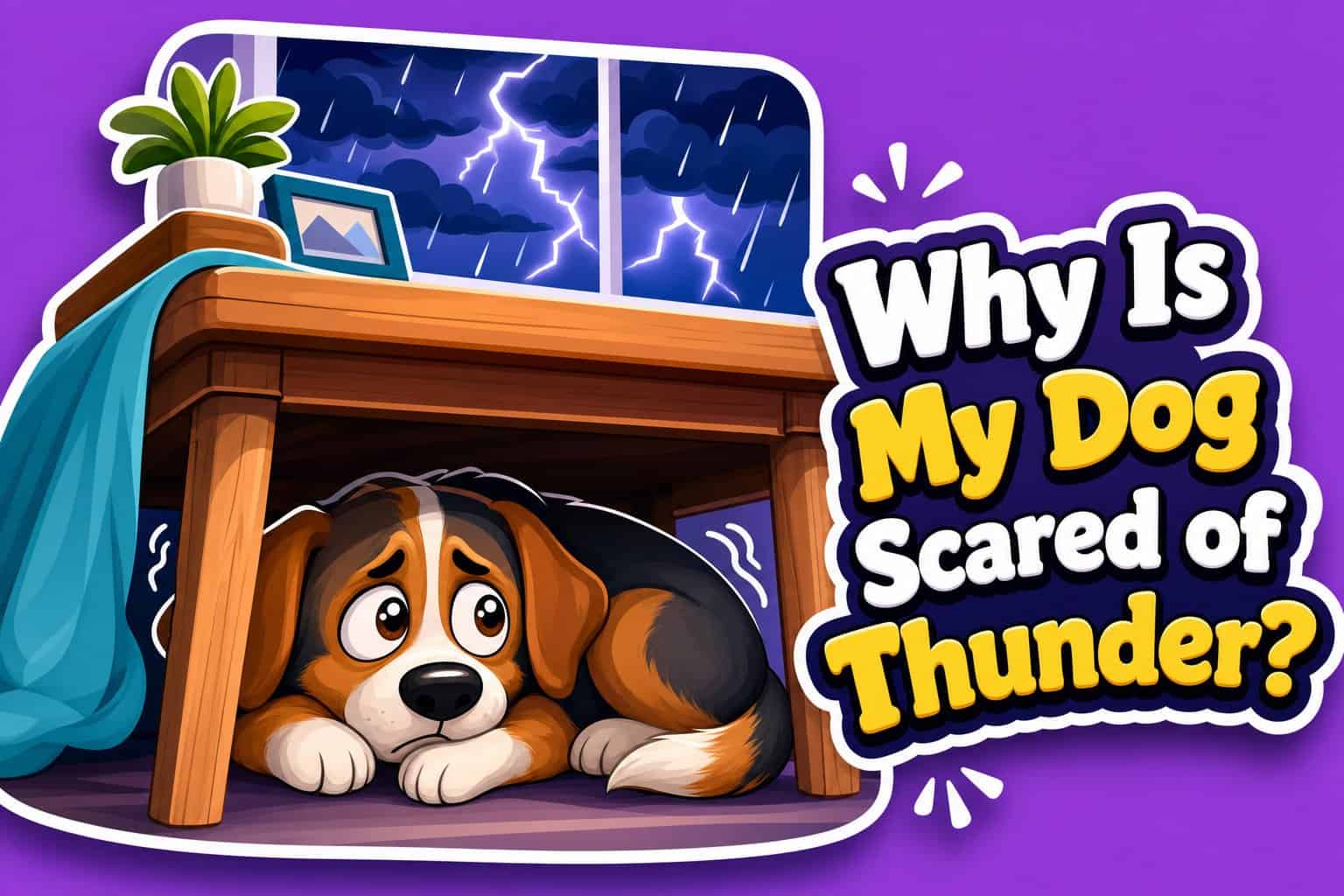
When thunder shakes the house, your dog may hide, shake, or cling to you. That reaction can feel sudden and confusing.
You want to help, but you may not know why it happens. Your dog is scared of thunder because loud booms, bright flashes, and changes in air pressure can trigger a strong fear response.
Dogs hear much better than you do, so storms can feel intense and overwhelming. Some dogs also sense static in the air, which adds to their stress.
Why Your Dog Reacts So Strongly to Thunder (And What It Means)
Thunder scares many dogs because of how they hear, how they process fear, and what they inherit from their parents. When you understand these factors, you can respond in ways that reduce stress instead of adding to it.
Your Dog Hears Thunder 4 Times Louder Than You Do
Your dog hears sounds you cannot detect. Dogs can hear much higher pitches and lower frequencies than people, and they notice small changes in pressure and vibration.
Thunder is not just one loud noise. It brings sharp cracks, deep rumbles, wind, rain, and changes in air pressure.
Some experts explain that storms also include dark skies and humid air, which can increase anxiety in sensitive dogs, as described in this guide on why dogs are afraid of thunderstorms. Low, rolling thunder can feel intense because dogs have more sensitive hearing.
According to Petco’s article on why dogs fear thunder, loud low-frequency sounds can overwhelm some dogs even if the noise does not damage their ears.
You might see your dog shake, pace, hide, or try to climb onto you. These reactions show that your dog feels unsafe, not stubborn.
5 Warning Signs Your Dog Has a Storm Phobia, Not Just Fear
Noise phobia is more than mild fear. It is a strong, repeated reaction to specific sounds like thunder or fireworks.
Some dogs develop this fear after a bad experience. A close lightning strike, a loud boom nearby, or being left alone during a storm can create a strong memory tied to sound.
Animal behavior experts note that storm fear often links to more than noise alone. The American Kennel Club explains in its article on understanding thunderstorm anxiety in dogs that dogs may react to static electricity, pressure shifts, and flashes of light along with sound.
Signs of noise phobia can include:
- Trembling
- Excessive panting
- Drooling
- Destructive chewing
- Trying to escape
If you see these signs during storms, your dog may need structured training or behavior support.
Is Your Dog’s Breed Wired to Fear Storms?
Your dog’s genes can shape how strongly they react to thunder. Some dogs are born with a more anxious temperament.
Research and clinical experience show that herding breeds, working breeds, and highly alert dogs often react more strongly to sudden sounds. They were bred to notice small changes in their environment, which can make storms harder to ignore.
Dogs with a family history of fear-based behaviors also face higher risk of noise sensitivity. If one or both parents showed storm anxiety, your dog may inherit that tendency.
Early socialization matters as well. Puppies who hear varied sounds in a safe setting often cope better later in life.
If your dog missed that exposure, you may notice stronger reactions when storms roll in.
Proven Ways to Calm Your Dog When Thunder Strikes
You can lower your dog’s fear by changing the space around them, using calming tools, and teaching them new responses to storm sounds.
Small, steady steps often work better than one big fix.
How to Create a Storm-Proof Safe Space Your Dog Will Actually Use
Start by giving your dog a safe, quiet space before the storm begins. Many dogs do best in a small room, closet, or covered crate.
Add soft bedding and close the curtains to block flashes of lightning. Turn on a fan, TV, or white noise to help cover the sound of thunder.
Dogs with storm anxiety often react to sudden noise changes, so steady background sound can help. You can also move your dog away from windows and exterior doors.
Some dogs feel better in interior rooms where outside noise feels less intense. The AKC explains common signs of thunderstorm anxiety in dogs, such as pacing and shaking, which often improve in a calmer space.
Stay calm yourself. If you rush or act worried, your dog may think there is real danger.
3 Simple Comfort Tools That Reduce Storm Anxiety in Minutes
Offer comfort if your dog seeks you out. Sit nearby, speak in a normal voice, and pet them if they relax with touch.
Do not force contact if they try to hide. Many dogs respond well to long-lasting chews or food toys.
Try:
- Stuffed Kongs
- Lick mats with peanut butter (xylitol-free)
- Vet-approved dental chews
These items give your dog something steady to focus on. Some trainers suggest introducing these tools during calm weather so storms are not the only cue.
You can find more ideas in these ways to soothe your dog’s fear of thunderstorms.
For severe cases, talk to your vet. Certain supplements or medications may reduce panic when fear is intense, as noted by Journey Dog Training in their guide on helping dogs scared of storms calm down.
How to Train Your Dog to Stay Calm Through Any Storm
Training helps change how your dog reacts to thunder over time. The most common method is desensitization.
Play low recordings of storm sounds while your dog is calm. Keep the volume very low at first.
Pair the sound with treats or play so your dog builds a new, positive link. Slowly raise the volume over days or weeks.
If your dog shows fear, lower the volume again. This steady process can reduce panic during real storms.
You can also teach a “go to bed” cue. Practice sending your dog to their safe spot and reward them.
When thunder starts, use the cue and give a treat. If fear stays severe, a certified trainer or veterinary behaviorist can build a plan that fits your dog’s needs.