Why Shouldn’t My Dog Eat Cat Food?

You catch your dog sneaking a bite from the cat’s bowl, and it seems harmless. The smell is strong, and dogs love it. Your dog shouldn’t eat cat food because it has too much protein and fat and lacks the balance dogs need.
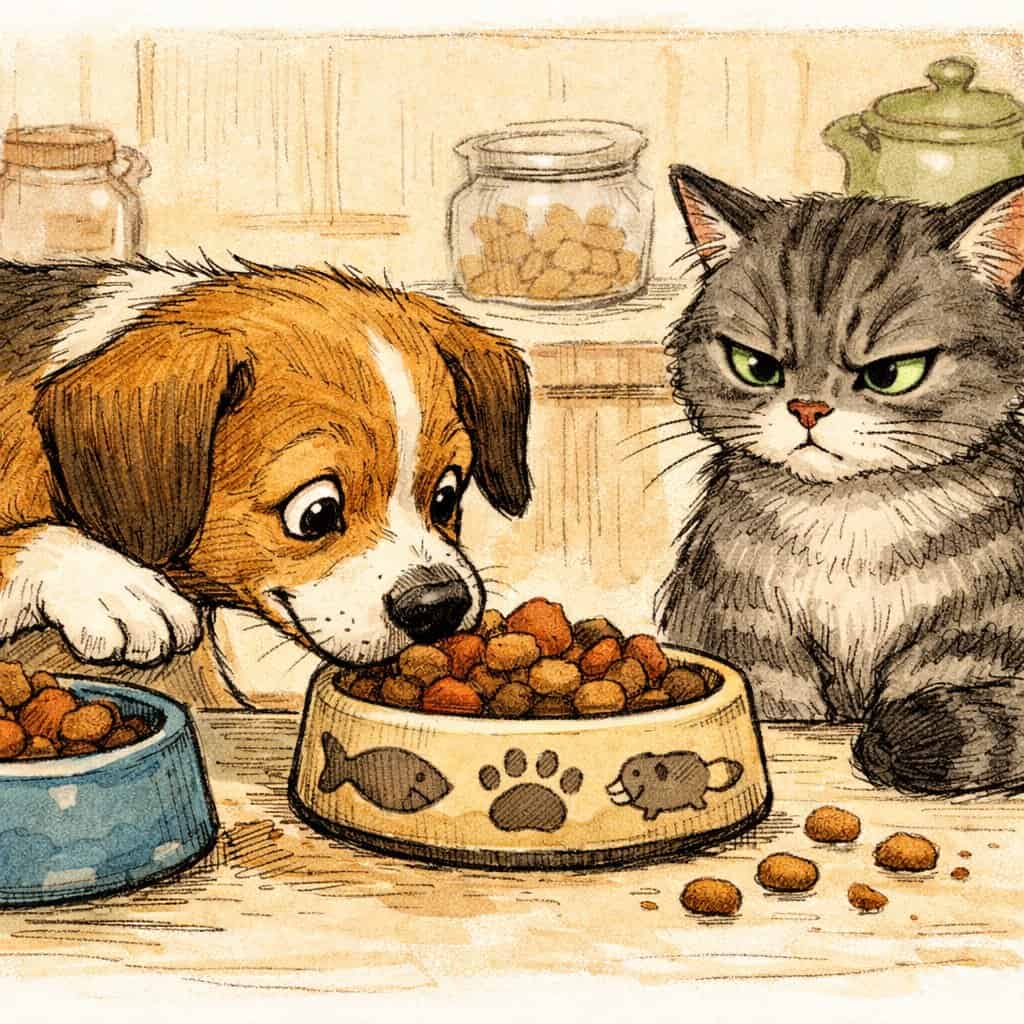
Even a few bites can upset your dog’s stomach. Regular access can lead to weight gain and stress on the liver or pancreas. Dogs and cats need different diets, and cat food fits a cat’s body, not yours.
You can protect your dog by understanding what makes cat food risky and how to stop the habit. Simple changes at home can keep both pets healthy and avoid repeat bowl raids.
Why Dogs Shouldn’t Eat Cat Food

Cat food may smell good to your dog, but it does not meet your dog’s needs. Dogs and cats process food differently, and cat food can cause health problems when dogs eat it often or in large amounts.
Nutritional Differences Between Dog and Cat Food
Dog food and cat food serve different goals. Cats need a diet high in animal protein and fat. Dogs need a more balanced mix of protein, carbs, fiber, and certain vitamins.
Cat food contains more calories, fat, and protein than dog food. This balance works for cats but not for dogs.
| Nutrient | Dog Food | Cat Food |
|---|---|---|
| Protein | Moderate | High |
| Fat | Moderate | High |
| Fiber | Higher | Low |
| Taurine | Not required | Required |
Dogs do not need extra taurine, but they do need enough fiber and plant nutrients. Cat food lacks these in the right amounts. When your dog eats cat food, your dog misses key nutrients and gets too much of others.
Health Risks for Dogs Consuming Cat Food
Cat food puts stress on your dog’s body. The high fat level can upset digestion and trigger pancreatitis, which causes pain and vomiting. Dogs with sensitive stomachs face a higher risk.
The extra protein can strain the liver and kidneys, especially in older dogs. Dogs with kidney disease can worsen fast if they eat cat food often.
Some cat foods also contain rich additives meant for cats. These ingredients can cause diarrhea, gas, or greasy stools in dogs. Over time, repeated exposure raises the chance of weight gain and obesity.
Short-Term and Long-Term Effects on Dogs
Short-term effects often appear within hours or days. Your dog may vomit, have loose stools, or seem tired. Some dogs also act extra thirsty or refuse normal meals.
Long-term effects develop when cat food becomes a habit. Weight gain happens fast because cat food packs more calories per bite. Obesity increases the risk of joint pain, diabetes, and heart strain.
Nutrient imbalance also builds over time. Your dog may lose muscle tone, develop dull fur, or show low energy. Feeding food made for dogs protects your dog’s health and supports steady growth, energy, and digestion.
Prevent Your Dog From Eating Cat Food
You can stop this habit with clear feeding routines, smart food placement, and quick action when mistakes happen. Small changes protect your dog’s health and help your cat get the right meals.
Safe Feeding Practices for Multi-Pet Households
Feed your pets on a set schedule instead of free feeding. Pick specific times and stick to them each day. This routine reduces chances for food stealing.
Serve meals in separate rooms when possible. Close doors during feeding so your dog cannot wander. If space is tight, use baby gates or crates for short periods.
Measure portions for both pets. Put bowls down only during mealtime, then remove leftovers after 15–20 minutes. This step keeps cat food from sitting out.
Helpful habits
- Feed cats first if they eat slower
- Supervise meals when pets share space
- Store pet food in sealed containers
Tips for Keeping Cat Food Out of Reach
Place cat bowls in high spots like counters or shelves. Most dogs cannot reach these areas, but cats can jump up with ease.
Use tools designed for this problem. Microchip feeders open only for your cat. Covered bowls and puzzle feeders also slow access.
Common solutions and how they help
| Method | Why it Works |
|---|---|
| Elevated feeding station | Blocks dog access |
| Microchip feeder | Opens only for your cat |
| Separate feeding room | Fully prevents stealing |
Pick one method that fits your home. Combine methods if your dog is persistent.
What to Do if Your Dog Eats Cat Food
If your dog eats a small amount once, watch for signs like vomiting, diarrhea, or stomach pain. Many dogs feel fine after a few bites.
Call your vet if your dog eats cat food often or shows symptoms. High fat and protein levels can upset digestion and stress organs over time.
Do not punish your dog. Redirect behavior instead. Clean up spills right away and adjust your setup to prevent repeats.
When to contact a vet
- Ongoing vomiting or diarrhea
- Lethargy or loss of appetite
- Repeated access to cat food
Act fast and adjust routines to stop the habit early.