My Senior Dog Smells Really Bad, Why?

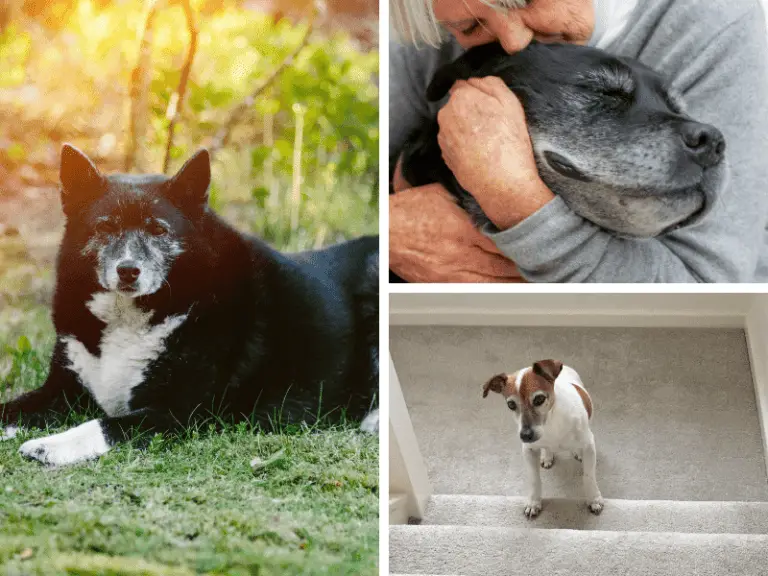
Gray hairs around the muzzle, the doorbell goes unanswered, and he no longer wants to jump into the car. Age does not spare dogs either.
A lot changes in the last quarter of life. For example, you might suddenly notice that your dog smells more strongly or even stinks.
Today I’ll tell you what that has to do with his age. You’ll also learn whether it is a warning sign and what you should do.
Old dog smells extremely bad: In a nutshell
Older dogs smell a bit stronger than young ones, but they should not stink. That usually points to an illness (tartar, kidney failure, ear infection, diabetes) or a food intolerance.
Have your dog examined at the latest when other abnormalities show up. The causes of the odor can be treated. Regular toothbrushing helps against bad breath.
Is smelling bad normal in old age?
Many senior dogs really do smell more strongly than their younger counterparts. A little odor in a senior is normal. Body odor and its intensity also vary from dog to dog.
There are dogs that hardly smell at all, while others are noticeably funky even though they are healthy.
So you don’t have to worry about a little odor. Keep an eye on it though, or better yet keep your nose on it, in case the smell gets stronger or other abnormalities appear.
5 causes of extreme odor in old dogs
A very strong, foul body odor in a dog almost always has a health-related cause. For diagnosis it is important to localize the smell. Is it coming from the head or the rear end. Or does the whole dog smell intensely unpleasant.
🔍 Cause #1: Ear infection
Ear infections caused by yeast have a strong characteristic smell. The most important yeast is Malassezia pachydermatis. In his doctoral thesis, Georg Martin Lehner writes that almost every other healthy dog can have these yeasts in the ear.
They do not necessarily lead to disease. Older dogs are more susceptible though, which makes it easier for the yeasts to cause trouble. If your senior’s ears give off
- a sweetish odor,
- there is brown to yellow discharge, and
- you notice intense itching,
it is probably yeast.
🔍 Cause #2: Anal sacs
The anal sacs can cause problems in dogs of any age. Their job is to coat the stool with a strong-smelling secretion. The body expresses it automatically during a bowel movement.
If the stool is too soft, no secretion is expressed from the anal sacs. If they stay full, they can become inflamed.
Overfull, impacted, or inflamed anal glands smell extremely unpleasant. You will hardly be able to narrow the odor down to your dog’s rear end. He will just smell like feces all over.
🔍 Cause #3: Bad breath
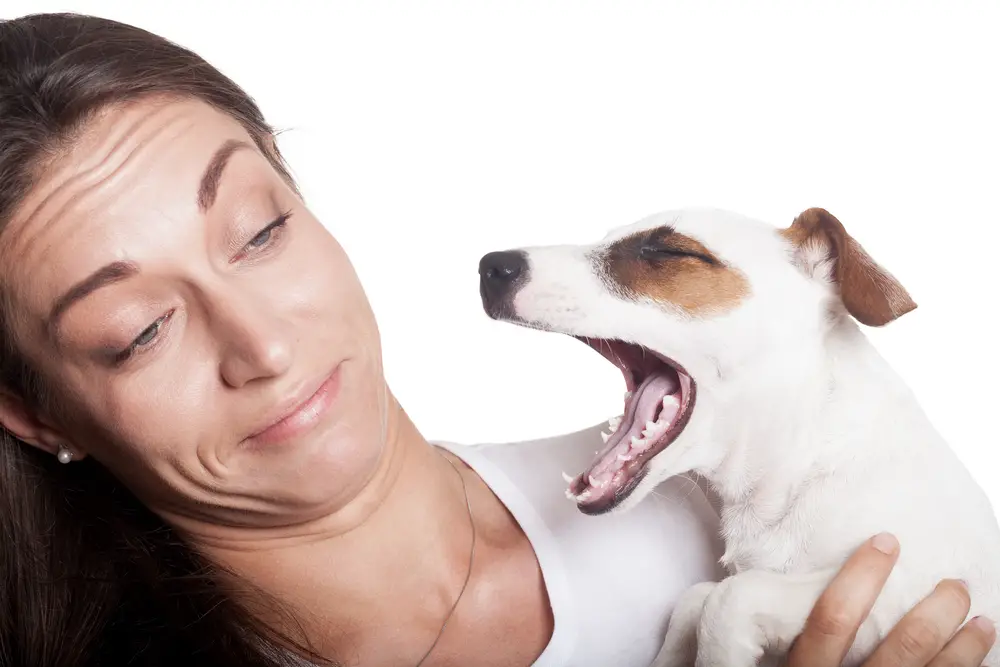
Bad breath has many causes. It is fairly easy to localize. Get down at your dog’s level and let him pant toward you. Alternatively, gently open his mouth and sniff carefully.
If it just about knocks you over, your dog has bad breath.
Stomach problems
Bad breath can be caused by digestive issues. If your dog has acid reflux, the belched stomach acid leads to the smell. You would recognize that by your dog
- drinking more,
- burping frequently, and
- licking excessively.
Tartar
Tartar forms over time. It is hardened plaque. That happens when plaque stays on the teeth and is bathed in saliva. What remains is rock-hard tartar.
Because those deposits teem with bacteria that feed on food residue, they smell awful. Tartar is easy to recognize. In dogs it first forms on the molars.
You will see it as a dark deposit that runs around the tooth along the gumline. Depending on severity, the gums may also be visibly inflamed or receding. The bad breath is putrid and almost brings tears to your eyes.
Lip fold dermatitis
Lip fold dermatitis is also called lip fold rot or lip fold pyoderma. It is triggered by a small injury, usually on the lower lip.
It most often occurs where upper and lower lip lie against each other. The friction damages the lower lip, allowing germs to enter. What you smell afterward is the inflammation.
🔍 Cause #4: Diseases
Systemic diseases can also lead to an unpleasant odor. It either comes from your whole dog or shows up as bad breath.
Kidney failure
Kidney failure is a common problem in old age. The kidneys are normally responsible for detoxifying the body. If they no longer do their job, toxins accumulate in your dog’s body.
This is how the odor develops: the body knows it has to get rid of these toxins somehow. It can push some of them out through the skin. He basically sweats the toxins out. That stinks.
In addition, you can recognize kidney failure by the following symptoms:
- vomiting
- refusal to eat
- increased fatigue
- noticeably little or a lot of urine output
- dull coat
- seizures
Diabetes
Dogs usually develop type 1 diabetes. That means they definitely need insulin. Before the disease is discovered, your dog’s blood sugar values get more and more out of control. That also leads to a distinctive odor.
With untreated diabetes, many dogs have bad breath. The smell is reminiscent of rotten, overripe fruit or acetone. You can also recognize diabetes by
- refusal to eat,
- weight loss (even if the dog eats normally),
- seizures,
- excessive thirst,
- increased fatigue,
- poor wound healing,
- cloudy eyes (with long-untreated diabetes), and
- vomiting.
🔍 Cause #5: Slowed metabolism
With age, not only does your dog slow down, his metabolism becomes a bit sluggish too. In an otherwise healthy dog, that does not lead to extreme odor.
That only happens if the animal also has, for example, kidney disease.
Even so, you can give your senior’s metabolism a little support.
Inappropriate food
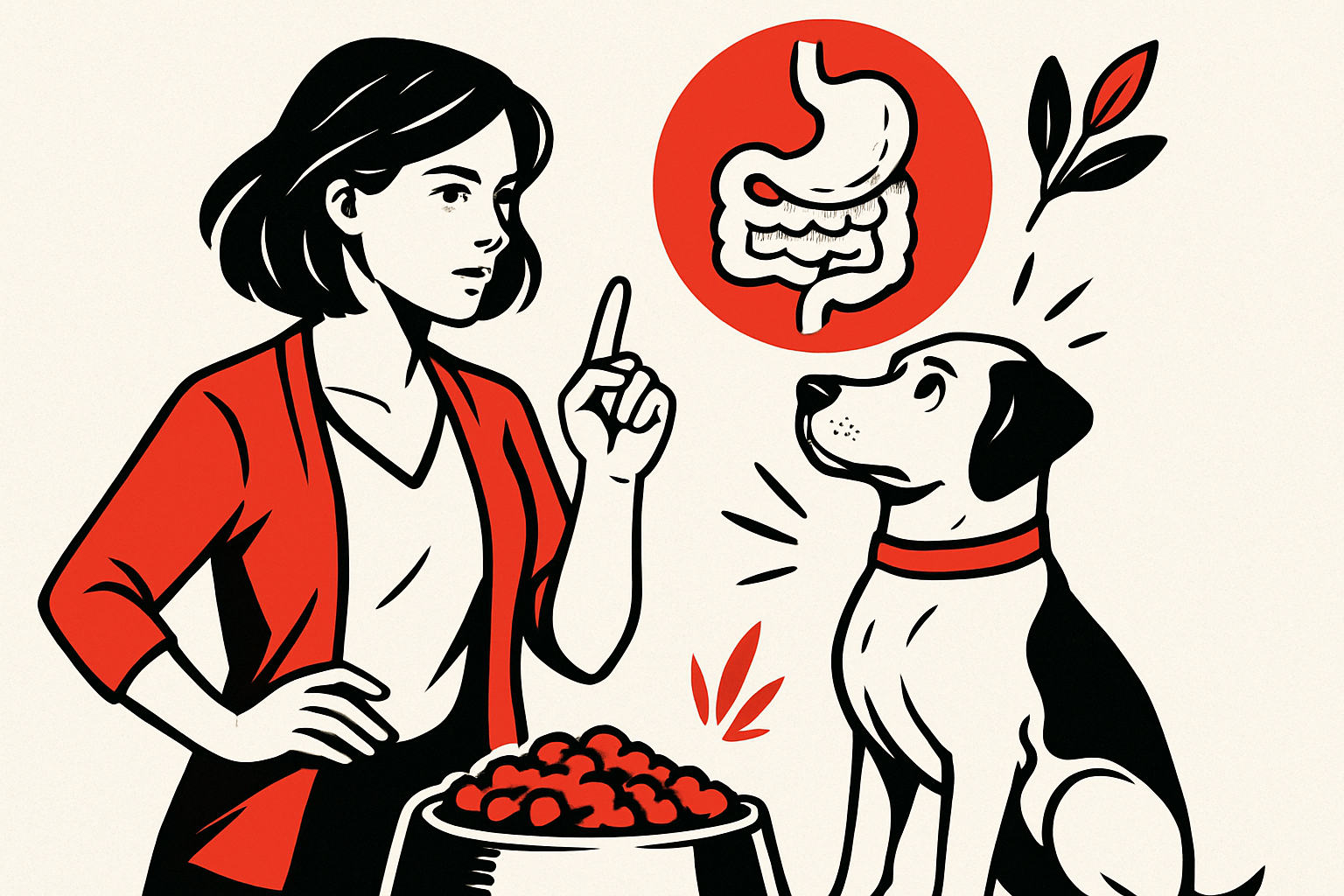
Hard-to-digest food often no longer agrees with older dogs. It stays in the stomach for a long time and moves only slowly through the rest of the digestive tract. Many dogs get gassy because of this, which also contributes to the bad smell.
When you should see the vet
One gassy day is not a reason to see the vet. Healthy dogs pass gas sometimes. It never smells like roses.
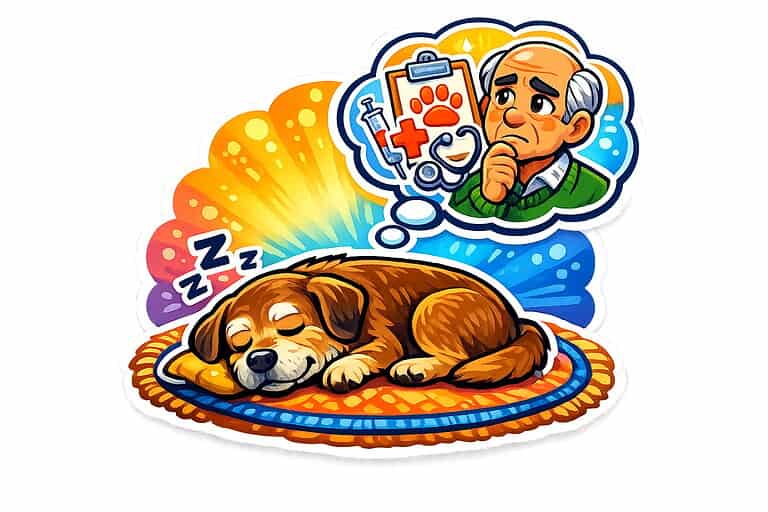
If you notice a truly extreme odor on your dog, it does not matter whether it seems to come from the mouth or the whole dog. Then it is time to see the vet. As you read above, the smell may point to a serious disease.
Tartar is not a cosmetic issue either, it can make your dog sick.
In the sections below, you will learn what helps with which type of odor.
Bad breath
If your vet finds tartar, they will likely want to remove it with an ultrasonic scaler. Do not agree to removal without an ultrasonic scaler or without brief anesthesia. Both are necessary to remove tartar completely.
There are medications for acid reflux. Long term, your dog may need a different food.
A lip fold dermatitis will probably need to be opened or flushed so it can heal. Your dog will get antibiotics for a few days.
If diabetes is the reason for the bad breath, your dog needs insulin. You will have to inject it regularly to keep his blood sugar in a normal range. Your vet will show you everything. It may feel unfamiliar at first, but you will both adapt to the situation.
To prevent bad breath, you can brush your dog’s teeth if he allows it. That is a good idea in general, because many dog owners neglect oral hygiene.
Even the participants in a study by Miller and Harvey stopped brushing during the study itself (38%).
Odor from the anal glands
Impacted anal glands may need to be emptied. If you also suspect inflammation, have your vet do it. The procedure can be painful for your dog.
Incorrect or too frequent emptying of the anal glands also leads to further problems.
You could injure your dog, which would inflame the gland even more. If it is emptied constantly, your dog will only produce more secretion, which makes the gland clog more easily.
Odor from the ears
A yeast ear infection usually does not go away on its own. Your dog needs medication against the yeast. You absolutely must use it long enough. Yeasts are very persistent and will come back if you stop too soon.
So be sure to follow your vet’s recommendation and do not end therapy early.
Odor from the whole body
If your entire dog seems to stink, he may have kidney disease or he may not be tolerating his food. In the latter case, a switch to something more easily digestible may already help. Also watch for allergies.
With kidney failure, your dog needs medications that support the kidneys. They cannot heal destroyed kidney tissue. That is why it is important to keep the damage as small as possible. You achieve that through regular checkups.
Conclusion
Older dogs really do smell more strongly because of their age. But there is still a big difference between a slightly stronger odor and a biting stench. The latter is never normal, not even in seniors.
I would always advise you to see the vet if you notice something like that. A strong smell can point to serious diseases that you need to catch quickly. Undetected kidney failure can drastically shorten your senior’s life expectancy.
But do not worry too much. More likely than a life-threatening illness is that Fido does not tolerate his food or is dealing with gas.
Frequently asked questions
Why does my dog suddenly smell so strong?
The simplest answer is that he rolled in something smelly. It could also be an illness (such as tartar, kidney failure, or an ear infection) that is causing the odor.
What can you do if an old dog stinks?
First, have the odor checked by a veterinarian to rule out a serious illness. Regular dental care and an easily digestible food help with the smell.
What food is best when a dog smells bad?
Choose an easily digestible food without unnecessary additives. Watch for allergies as they can also lead to the odor.